Schedgy
Schedgy is my own product: a cross-platform household task manager for couples, families and flats that ends chore scorekeeping with fair, transparent distribution. I took it from first commit to public launch in five months, solo - product, brand, the Flutter apps, the Firebase backend, the website and the go-to-market. Live on the App Store and Google Play.
- Client
- Schedgy
- Role
- Founder & Product Designer - product, brand, Flutter apps, backend and go-to-market
- When
- 2025 - present
- Work
- Product Design, Flutter Dev, Gamification, Founder
- See it
- Schedgy.app


Disagreements over household responsibilities rank among the top five causes of conflict in cohabiting relationships. The pattern is always the same: one partner becomes the household project manager - tracking everything, remembering what needs doing, coordinating everyone else - while the others stay reactive. The mental load is invisible, so it never gets shared. Generic to-do apps don't fix it: they have no concept of a household - no member assignment, no rotation, no sense of whether the split is fair - and they all start from a blank page, so the system gets abandoned before it ever means anything. Schedgy was built for the two audiences that feel this hardest: couples and households who want to divide domestic work fairly without nagging, and ADHD/neurodivergent adults who need external structure and low-friction systems.
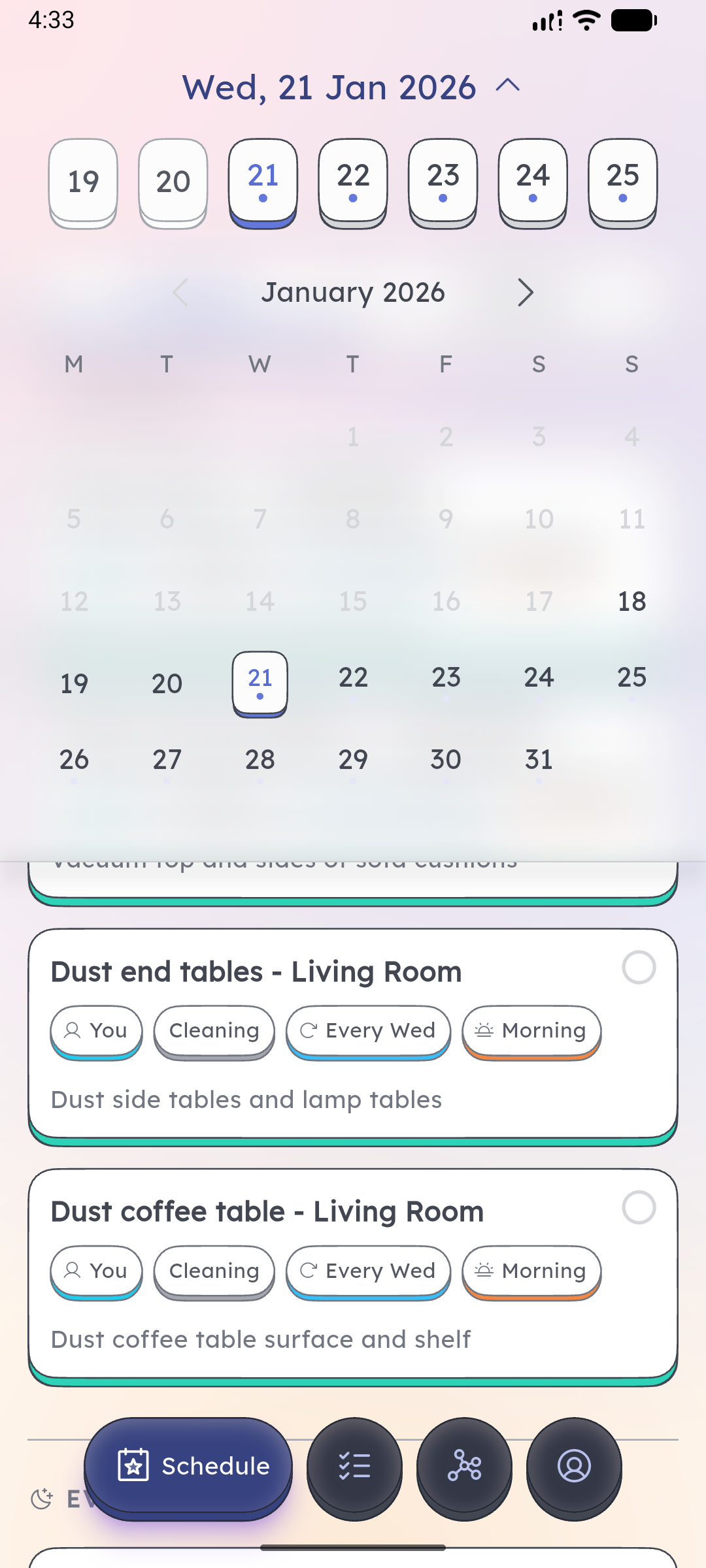
Schedgy is a real-time collaborative task manager designed specifically for shared homes. Households form around a six-character invite code; tasks carry recurrence, time blocks, member assignment and an effort weight; and everything syncs live across every member's device, with full offline support. I did every part of it: the product thinking, personas and PRD; the brand; the iOS and Android apps in Flutter with AI-assisted coding via Claude Code; the Firebase backend and cloud functions; the marketing website; and the App Store and Play Store launch in seven languages.
Designing Fairness
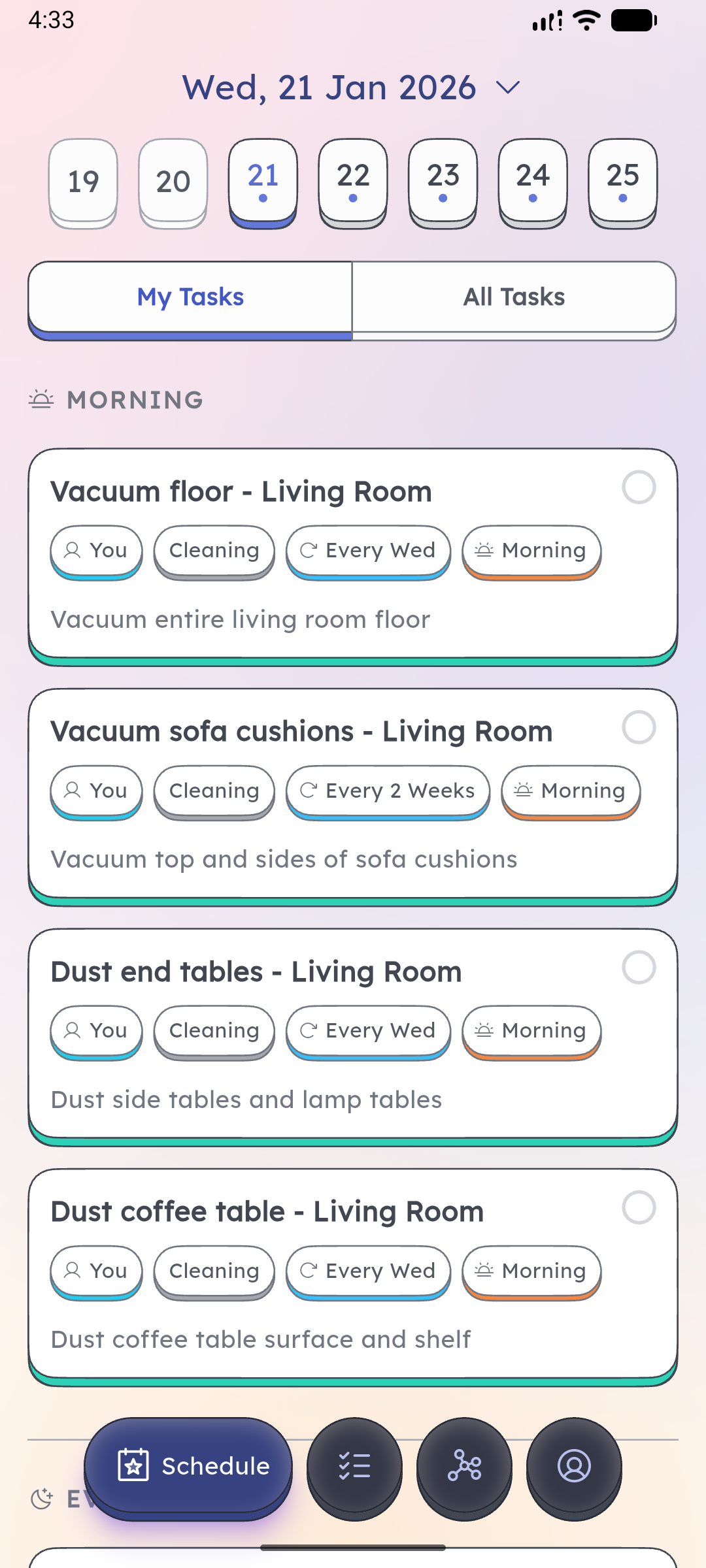
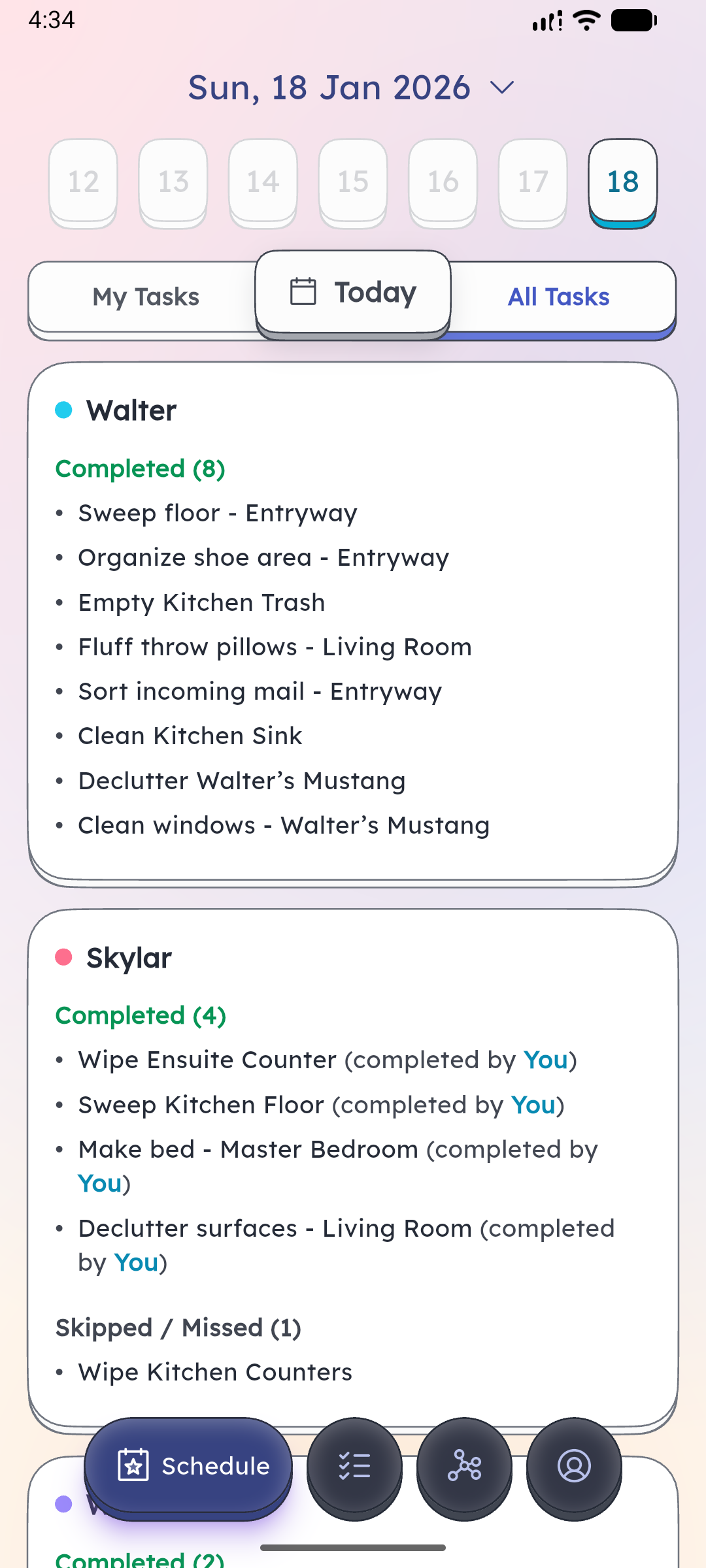
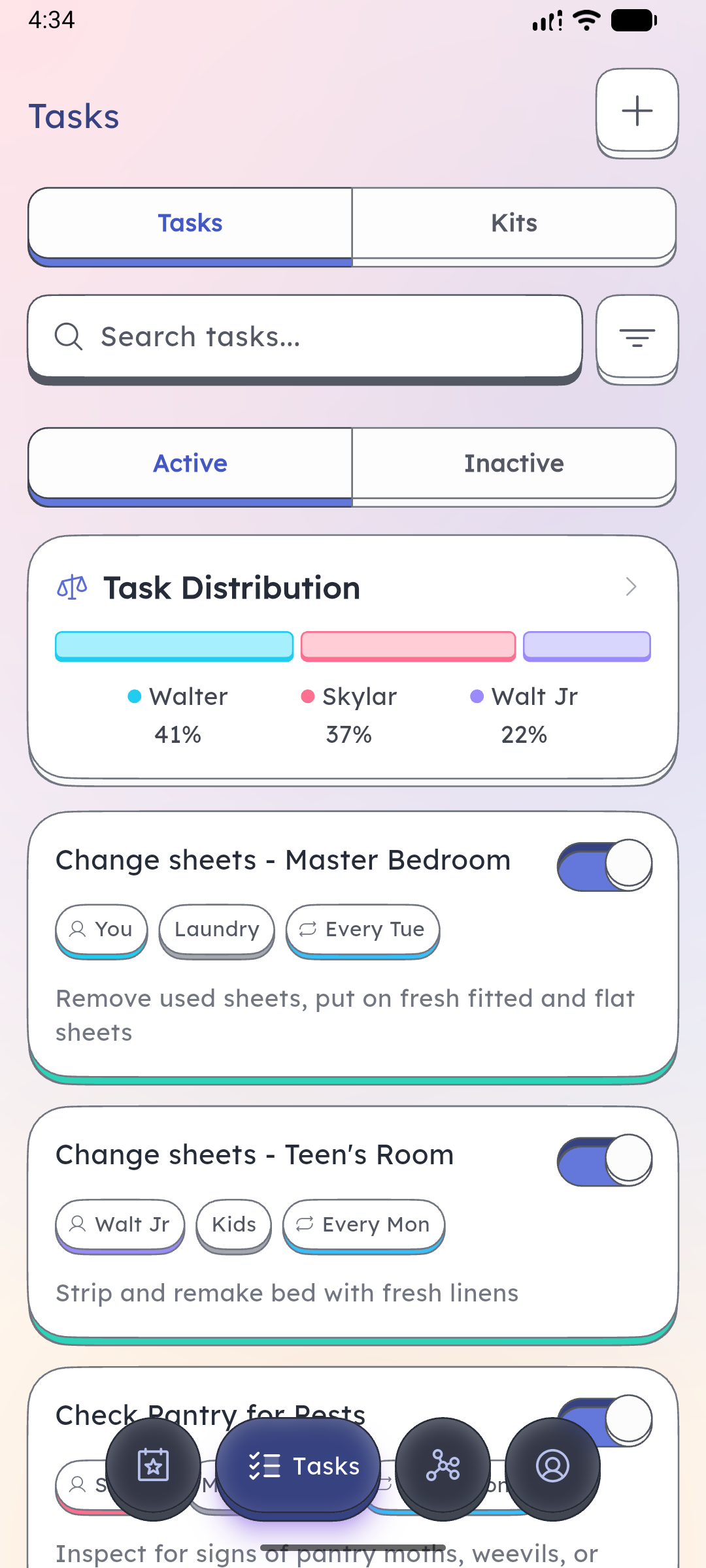
Fair means visible. Every task has a weight on a 1-10 effort scale, and a distribution engine assigns work to minimise imbalance - so one partner can't quietly accumulate all the heavy jobs while the split still looks even by count. The balance is shown as percentage bars, not a scoreboard. Assignment is decoupled from accounts: households have member slots, so a couple can set up their whole distribution before the second partner has even installed the app, and kids can hold slots without needing their own email or phone.
Solving the Blank Slate
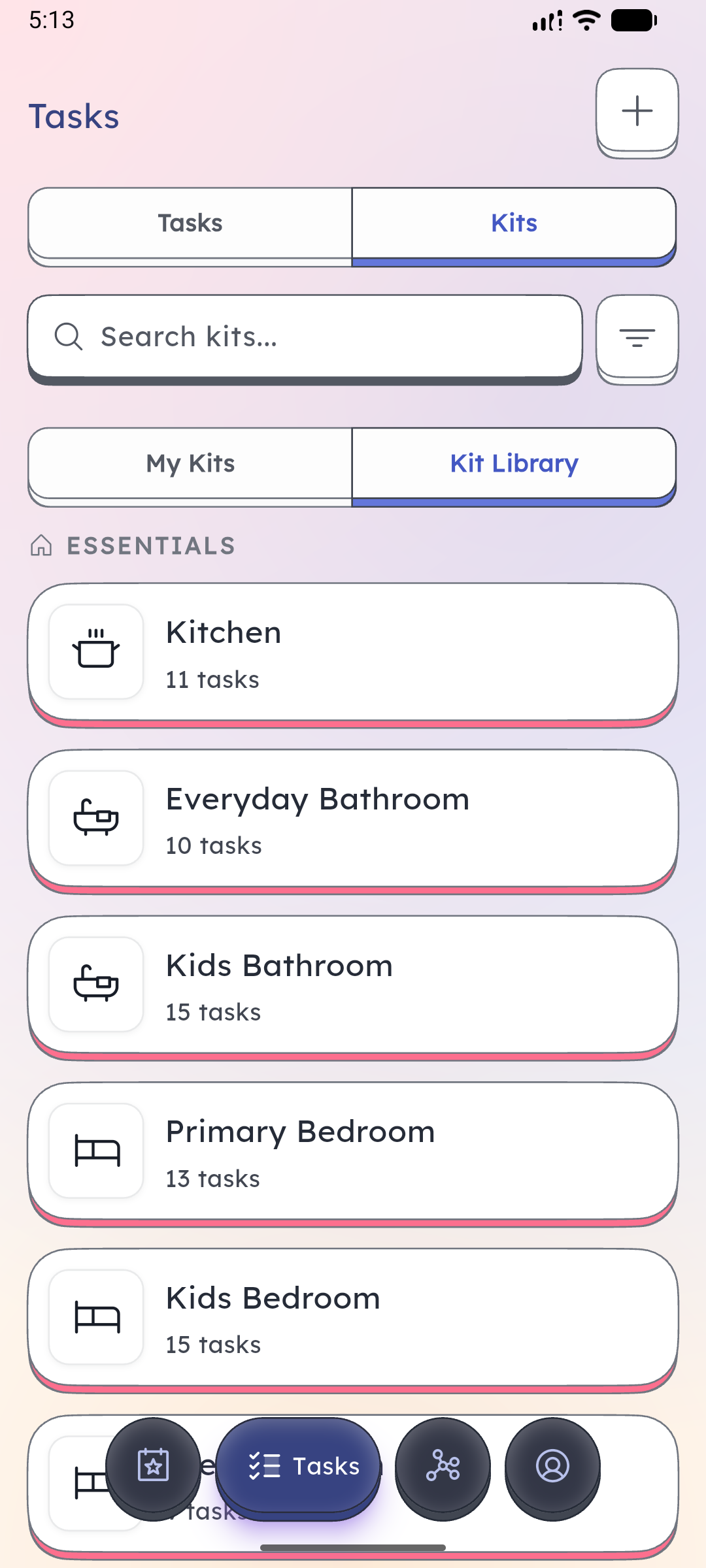
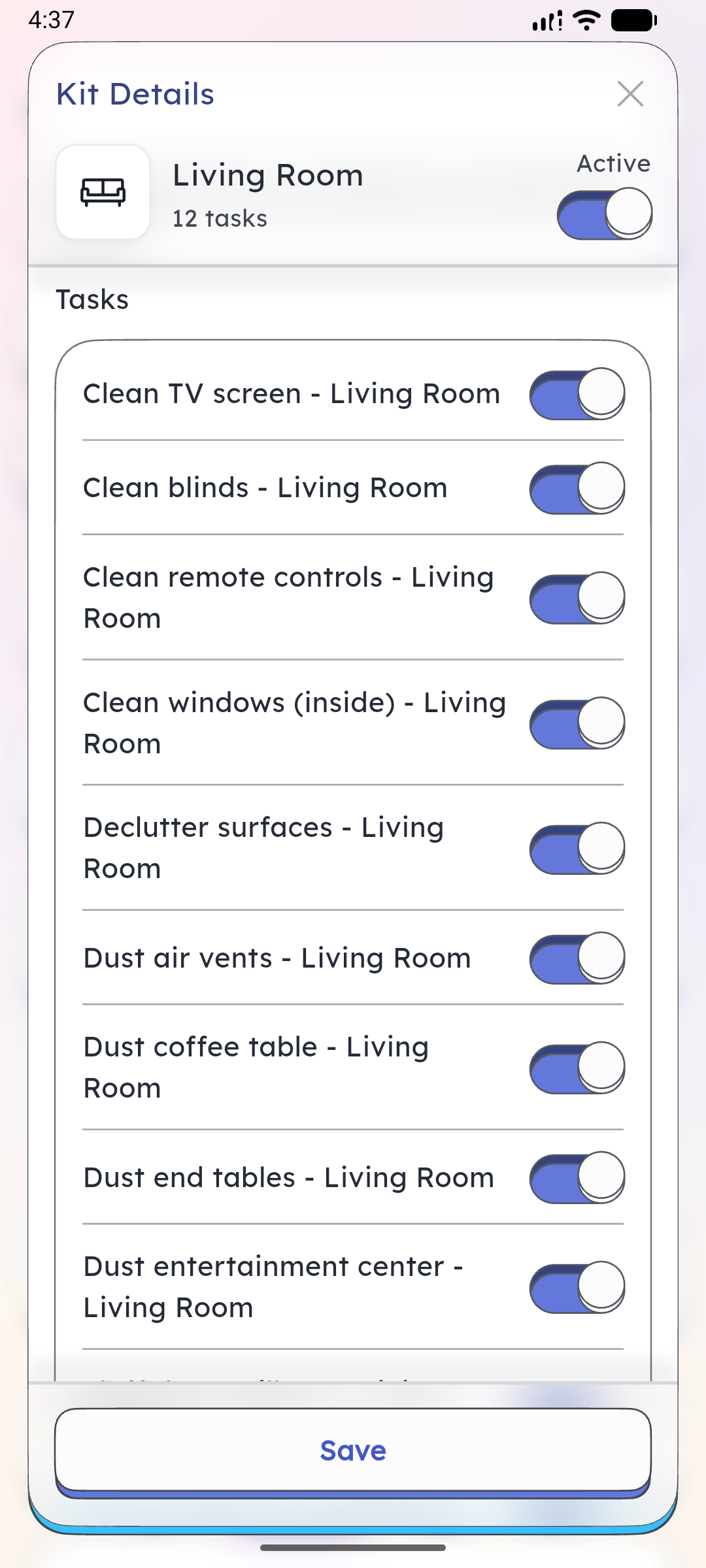
The biggest onboarding killer was the empty list. Schedgy ships with a library of 31 pre-built kits - rooms, life events, seasonal routines - drawing on a hand-built dataset of over 1,600 atomic household tasks, each indexed by room, category and effort. A short personality quiz tunes which tasks get recommended, and kits can be switched on or off wholesale as life changes.
Rotation
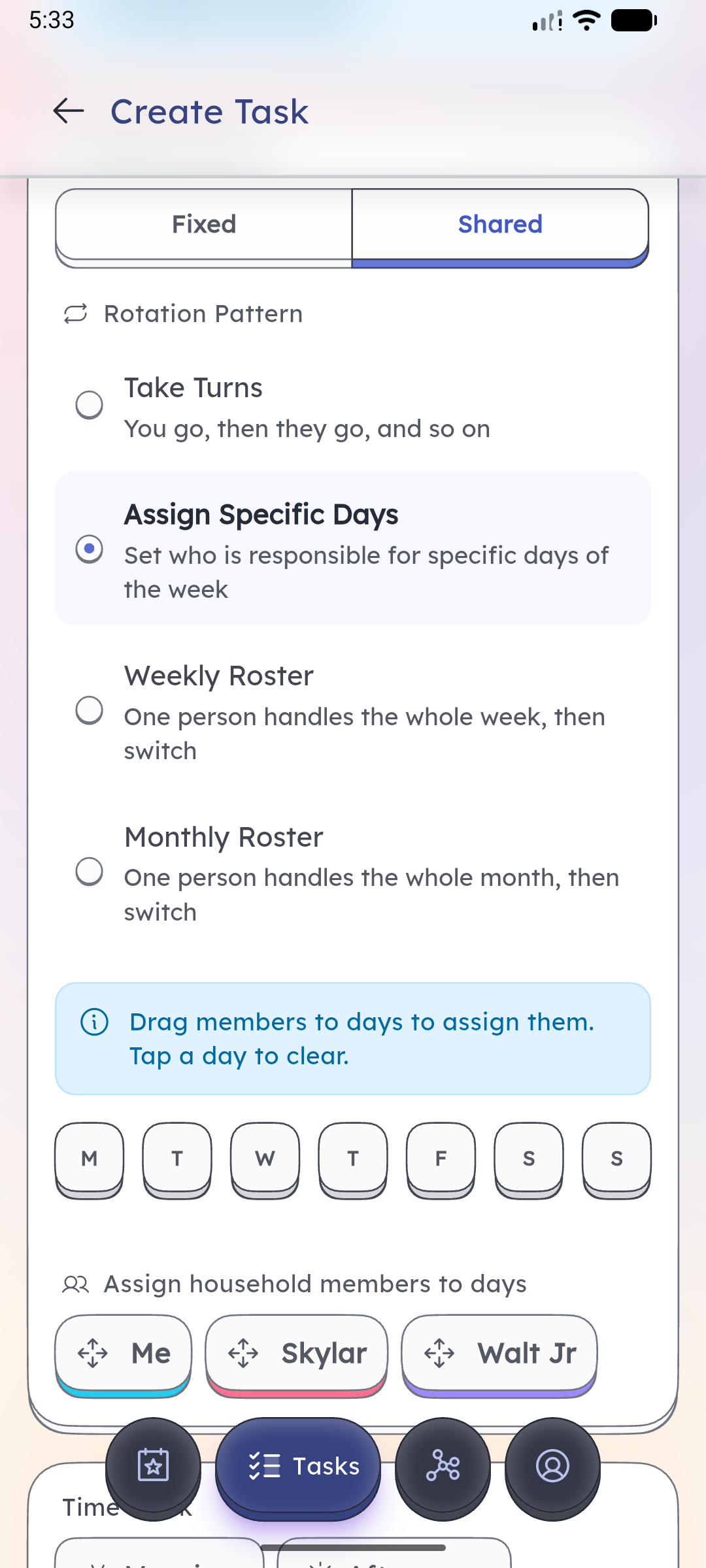
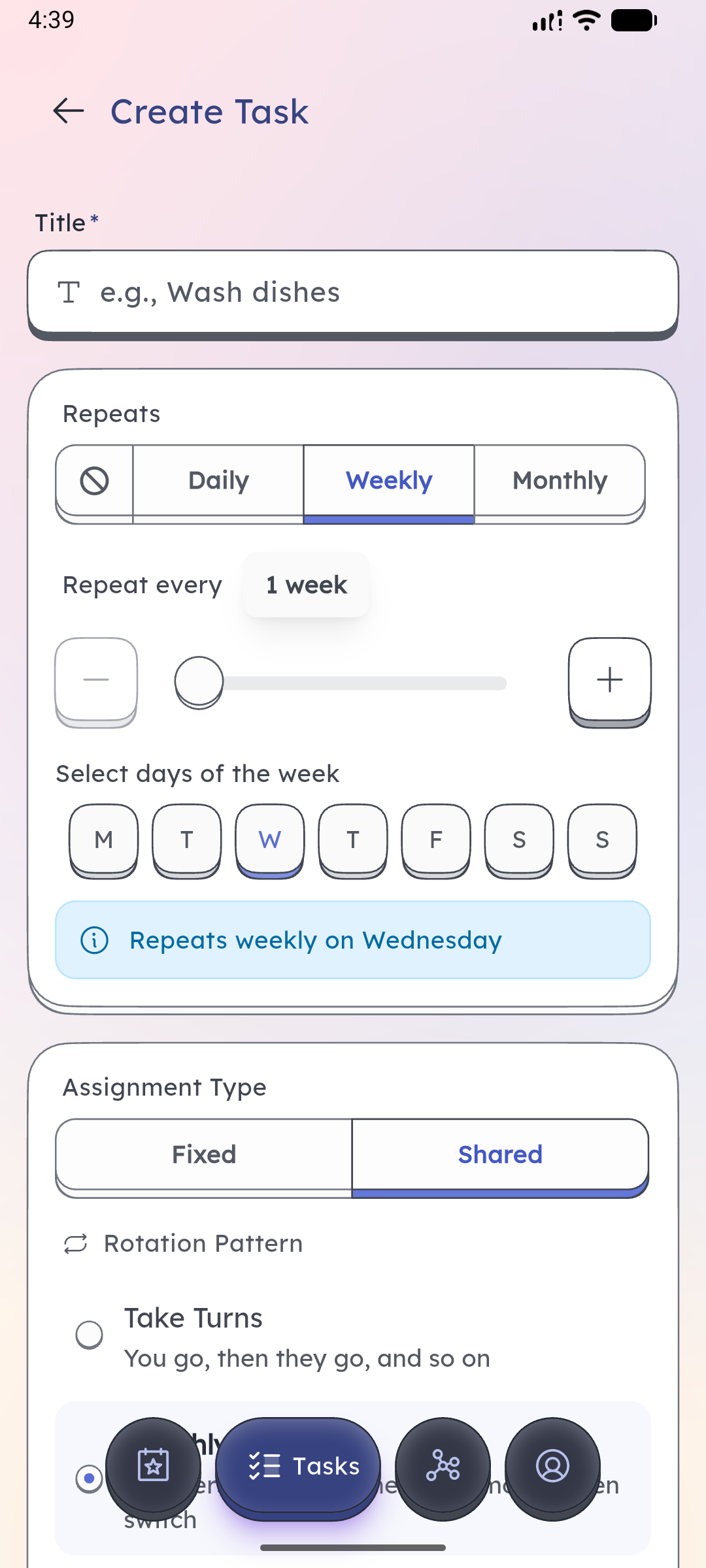
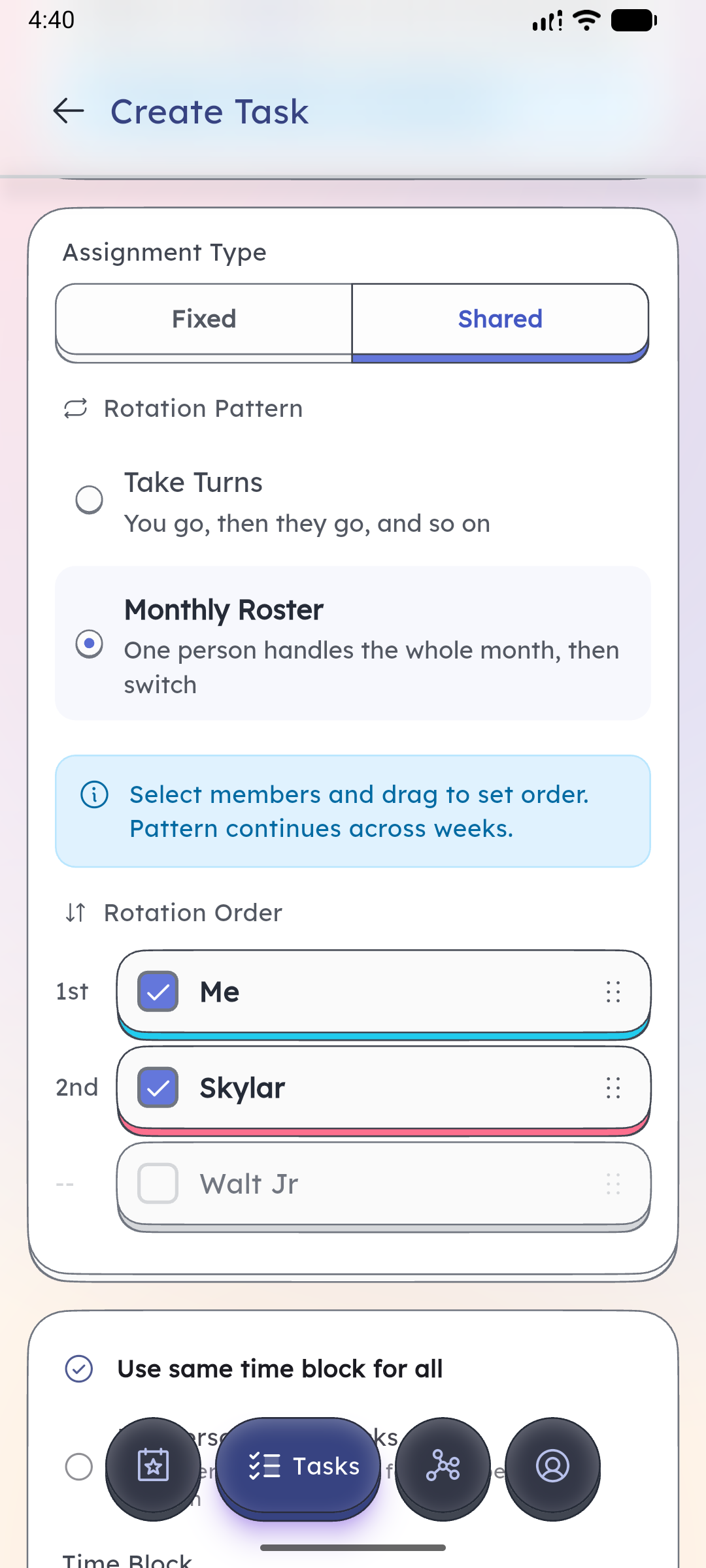
Rotation is where fairness becomes automatic instead of negotiated. Four patterns - alternating, weekly, monthly and day-based - keep recurring tasks moving between members so nobody owns the toilet forever, and a rotation calculator pre-computes whose turn every future occurrence is, surviving members joining, leaving or swapping slots.
Gamification Without Competition
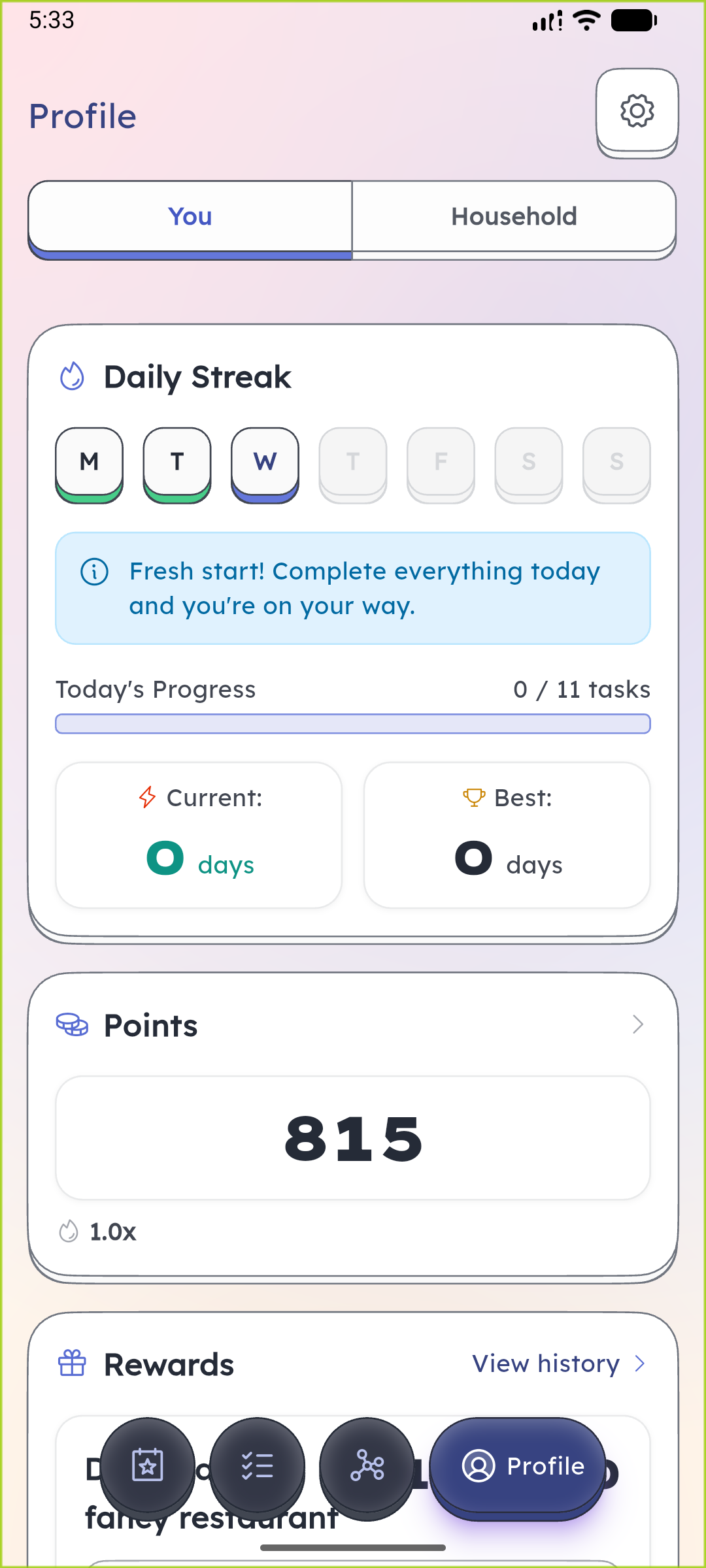
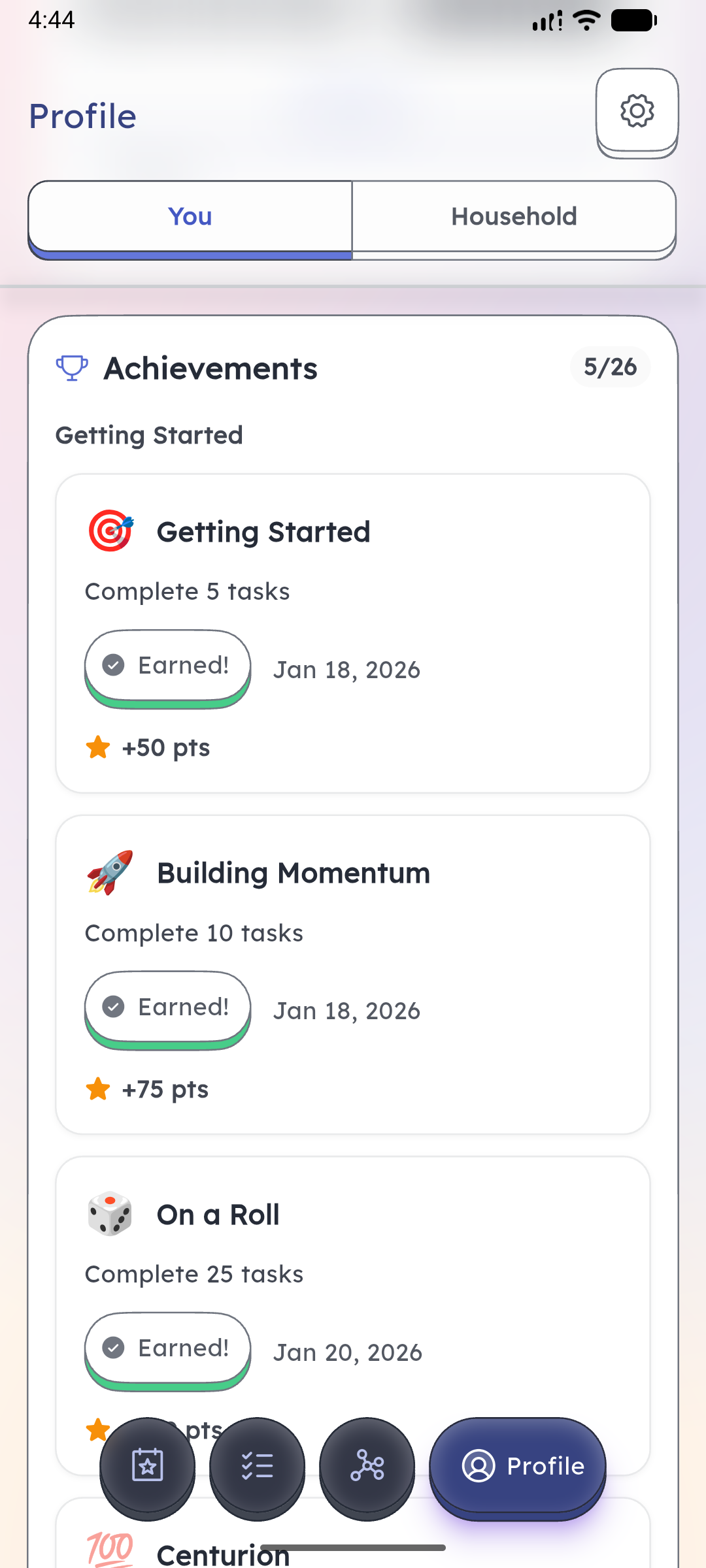
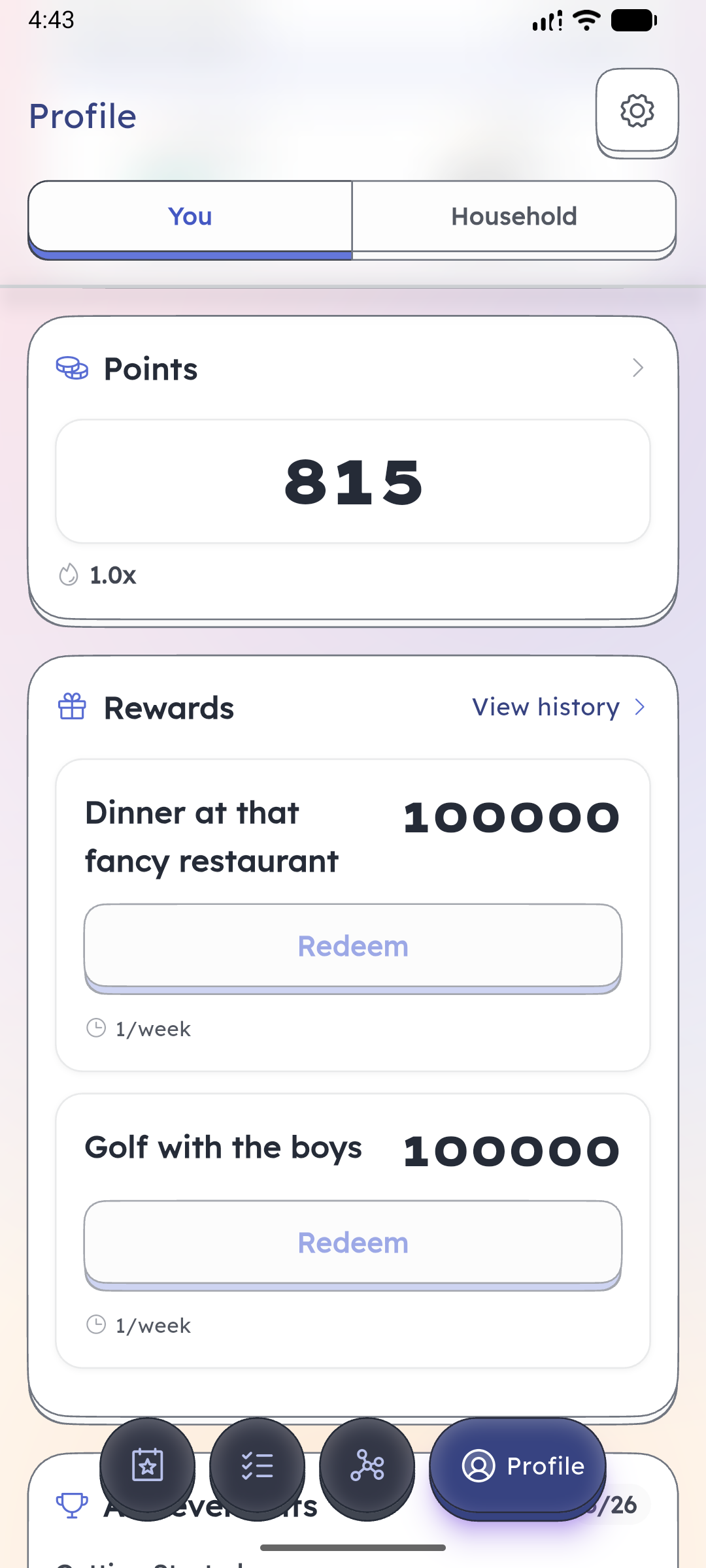
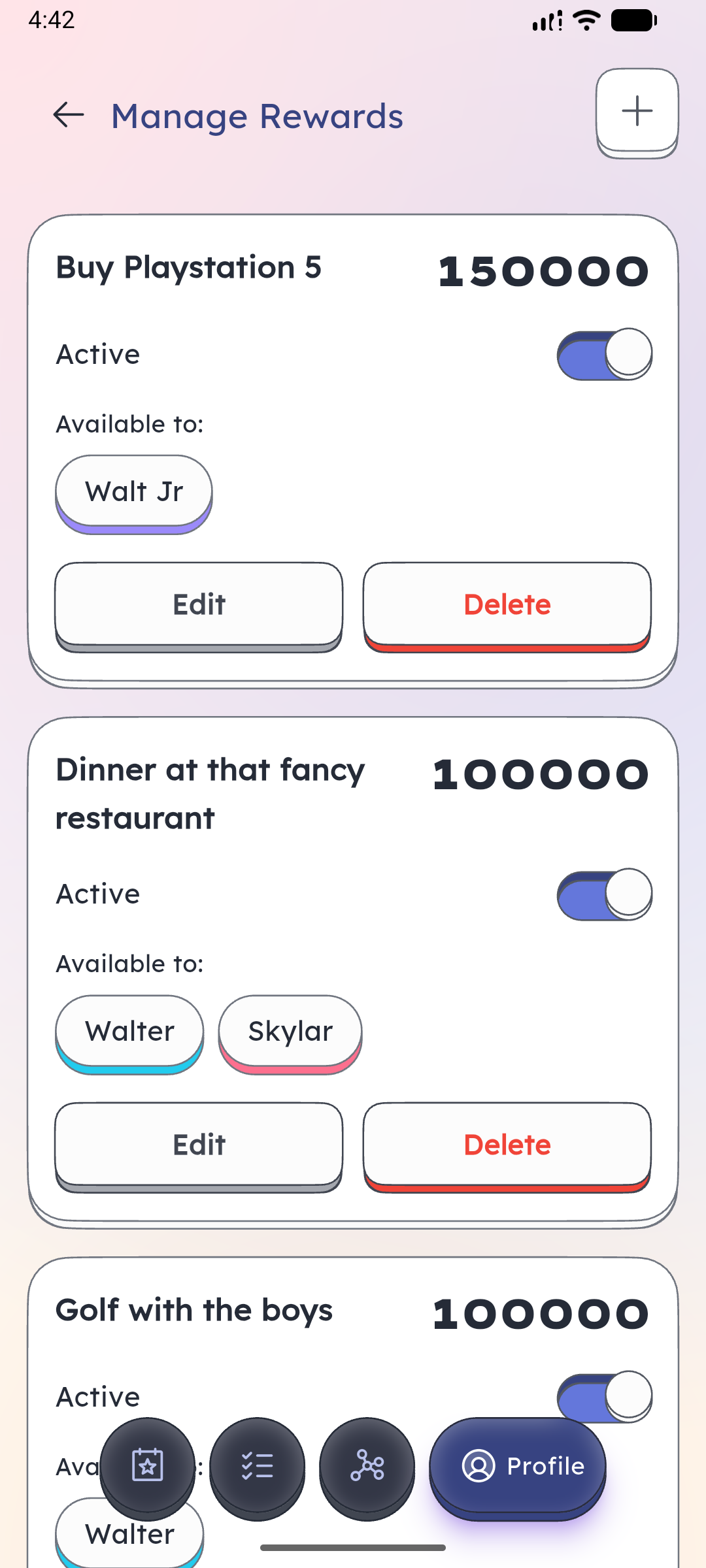
The gamification is deliberately household-level, not head-to-head. The streak is a single consecutive-days-at-100% measure for the whole home - it encourages coordination, not competition - with a 24-hour grace period and earnable shields that protect it when life happens. Points scale with task weight, 26 achievements mark milestones, and rewards are redemption-based so households define their own prizes. Leaderboards were designed, considered and rejected: ranking partners against each other recreates exactly the scorekeeping the app exists to end.
Engineering Decisions
One Flutter codebase on clean architecture - immutable models, typed failures instead of exceptions, and the recurrence and rotation calculators isolated as pure, heavily unit-tested services, because the next third Wednesday of the month is exactly the kind of logic that must never be vibes. Firestore's built-in persistence gives offline-first behaviour without a custom sync layer; cloud functions deliver timezone-aware notifications, so the daily summary lands at 8pm local time, not UTC. Localisation covers seven locales and over 1,500 strings, kept in sync by a pre-commit hook so a partial translation can't ship. Child accounts run on the member-slot model with age-gated UI, designed against US child-privacy requirements.
Launch & Business
Schedgy launched freemium: free for two-person households, with Schedgy Plus unlocking up to eight members and the full feature set. The trial is 14 days by design - exactly two weekly rotation cycles, long enough for both partners to feel the product working before paying. Around the app I built the schedgy.app marketing site with deep-linked household invites that fall back to the store, wrote the store listings in every supported language, and put together a lean go-to-market plan targeting the ADHD and couples communities through micro-influencer and UGC partnerships.
Outcome
Live on the App Store and Google Play, five months from first commit to public launch - eight development phases covering auth, tasks, recurrence, rotation, onboarding, gamification, kits and platform features, shipping a release every few days. A complete solo execution: research, brand, design, mobile and backend engineering, website, localisation, compliance and marketing, all one pair of hands.
Have a similar project in mind?
Tell me where it stands and what you need from it, and we’ll work out the right way to approach it.