Enroller
A student choosing a school abroad is also choosing a neighbourhood. I led design for Enroller’s school marketplace, shaped around what each side needed. Students got a map to choose by and one place to apply. Agencies got the structure to manage whole teams of agents.
- Client
- Enroller
- Role
- Product Design Lead - hybrid designer and PM across web and mobile
- When
- 2022 - 2025
- Work
- Product Design, Research
Enroller connects international students with New Zealand schools and the education agents who guide them. Three problems stood between a student and a confirmed place. Choosing a school from a list. Applying through scattered channels. And agencies trying to run whole teams on a product built for one agent.
The same pattern ran through all three: one interface stretched across very different jobs. Students choosing a school needed something different from students applying to one. Agencies managing their teams needed something else again. Each side needed a product built around its own work.
Picture the neighbourhood first.
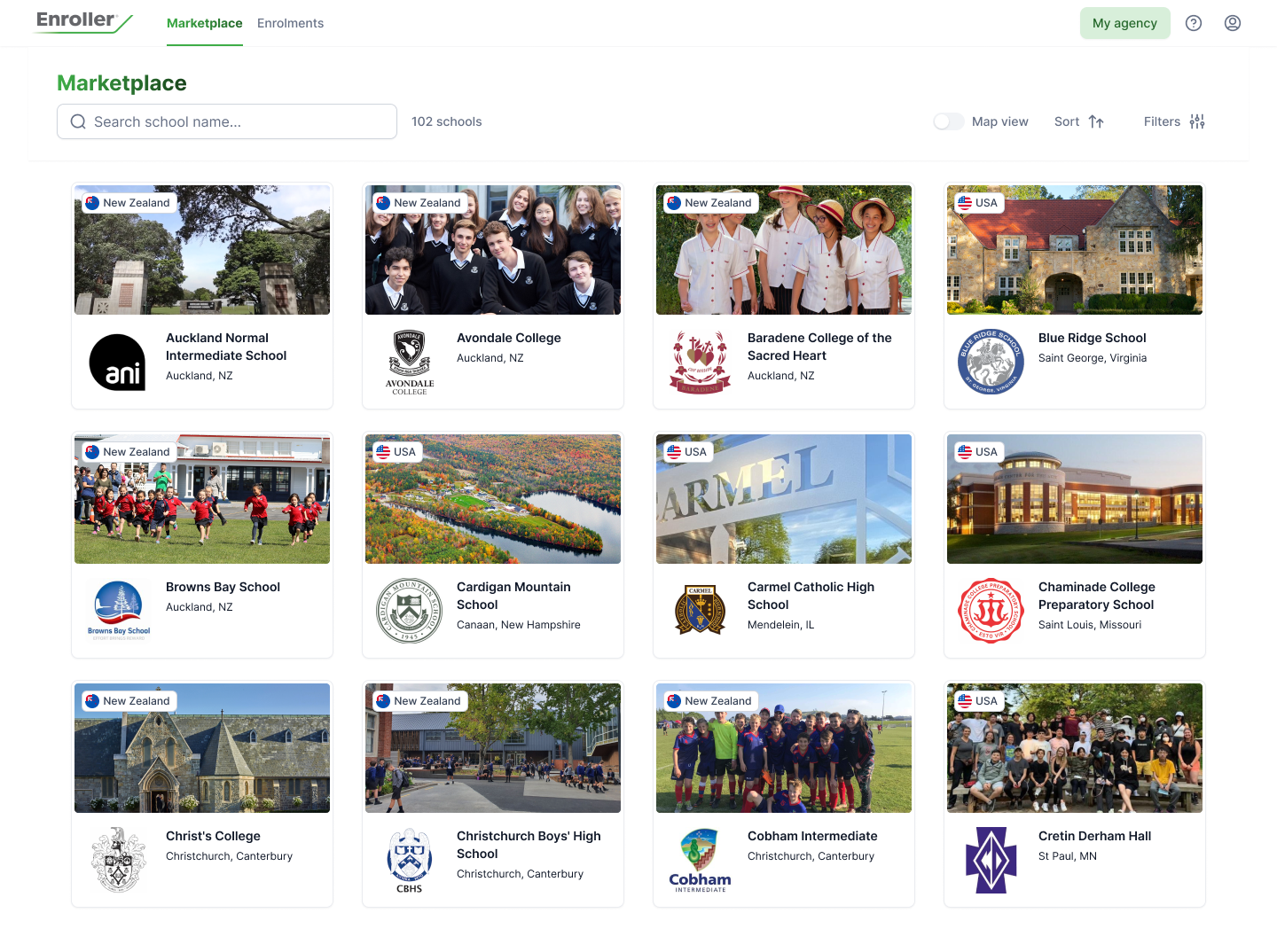
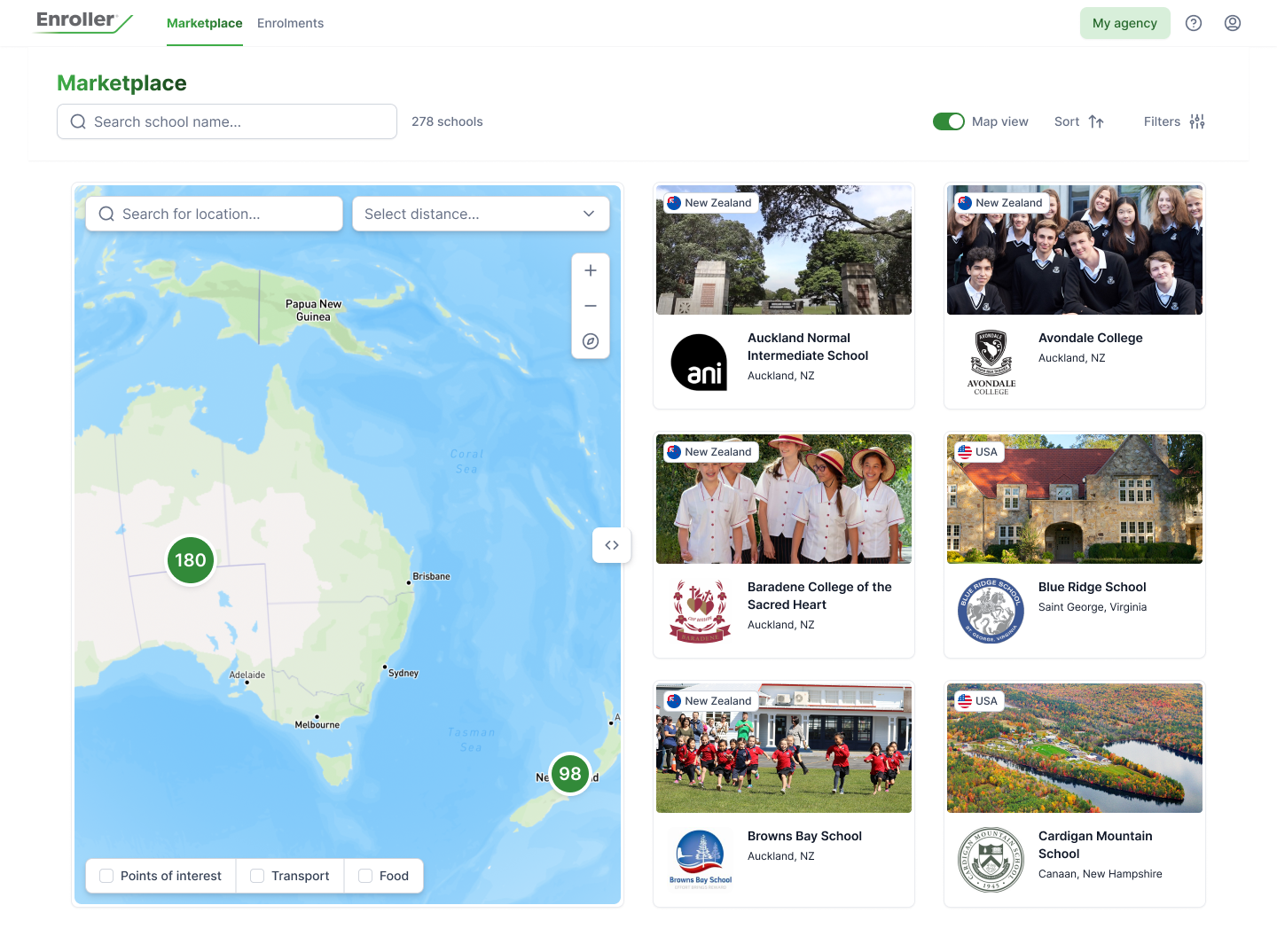
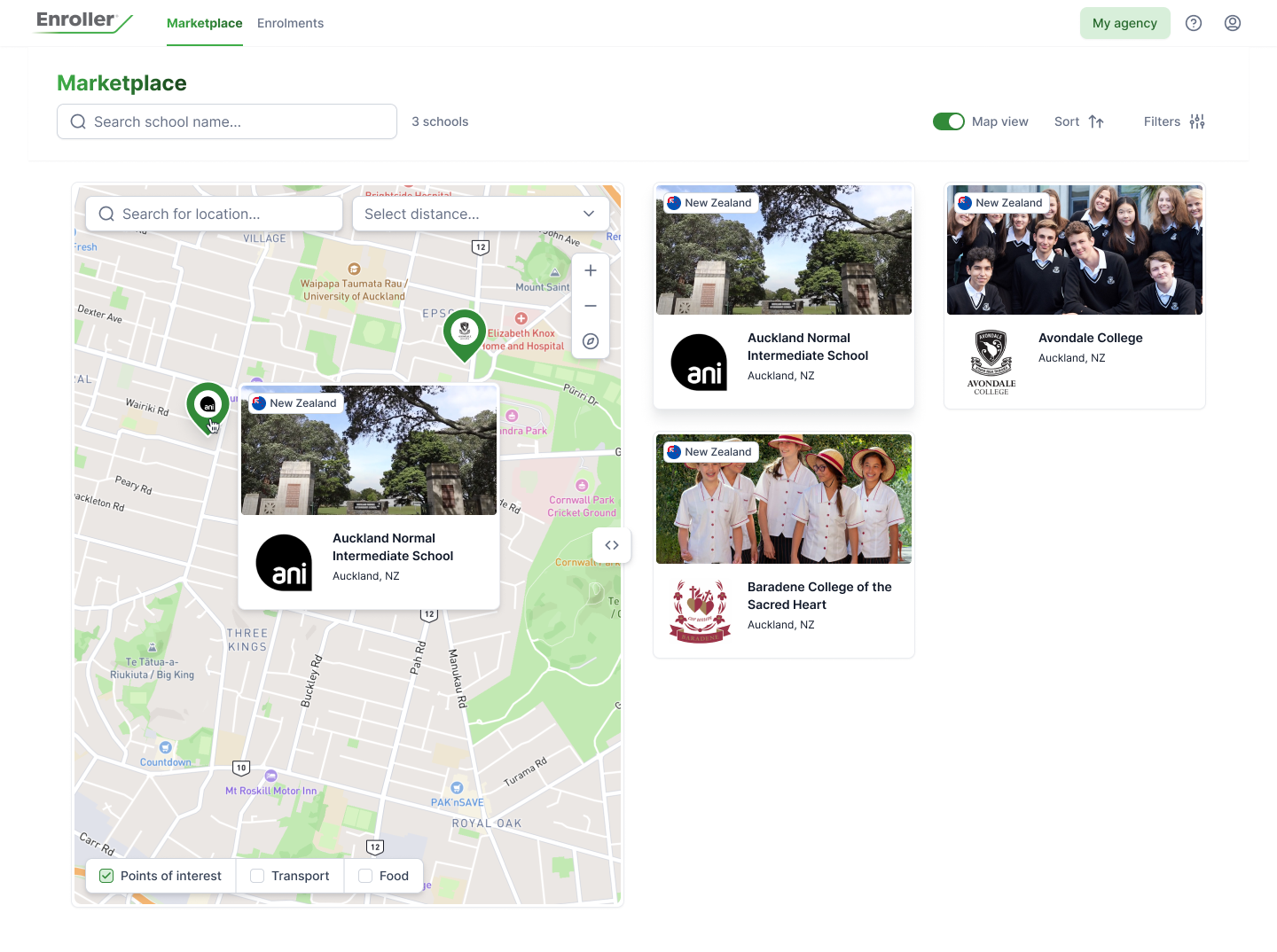
International students wanted to know what an area was like and what was around each school. Often the deciding factor was how close it was to the relatives they planned to live with. A list of schools couldn’t answer any of that. So the marketplace gained a map. It shows schools among their surroundings and points of interest. Students can search by location to judge the distance from where they will live. They could picture their life there before they applied.
One place to apply.
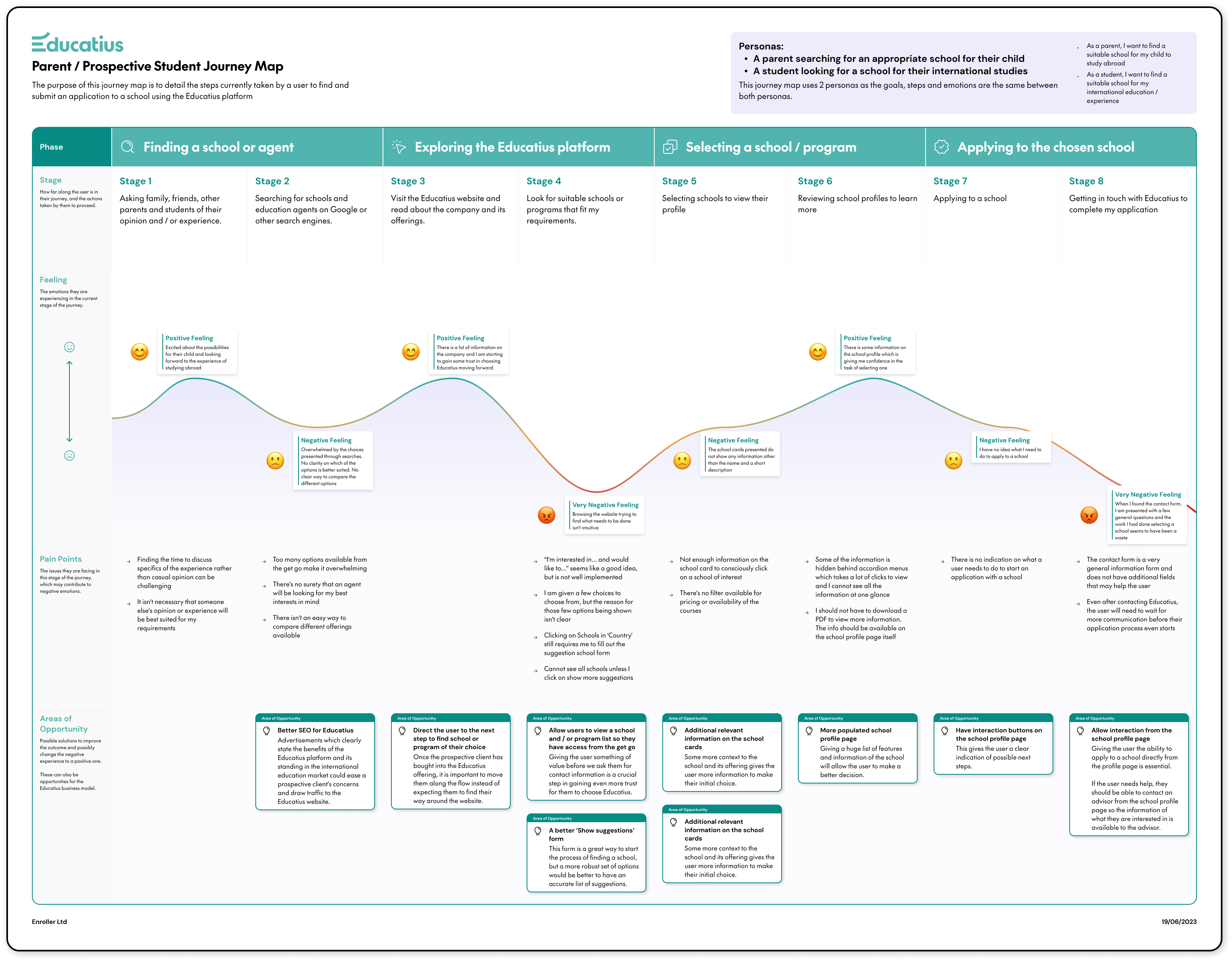
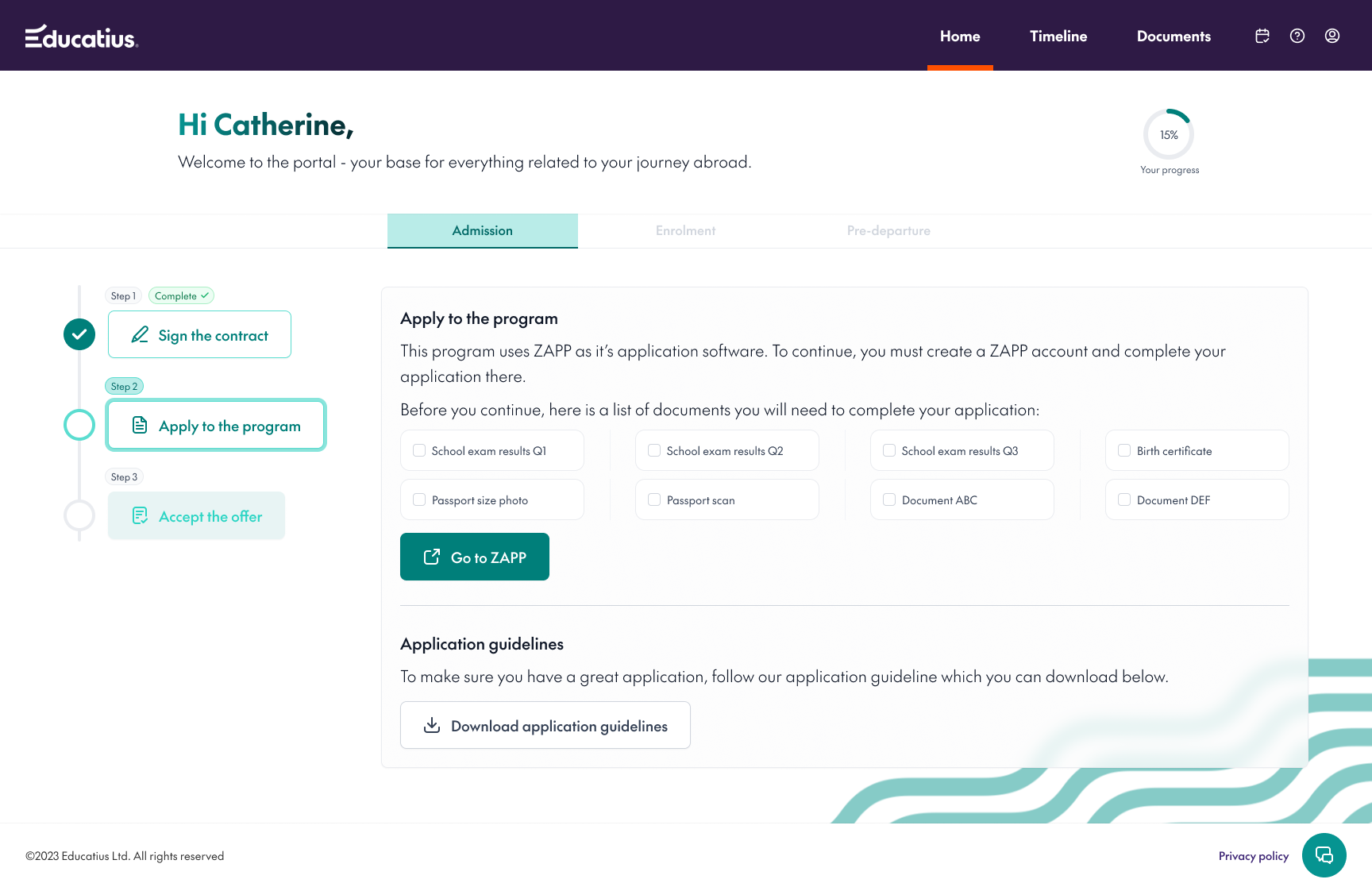
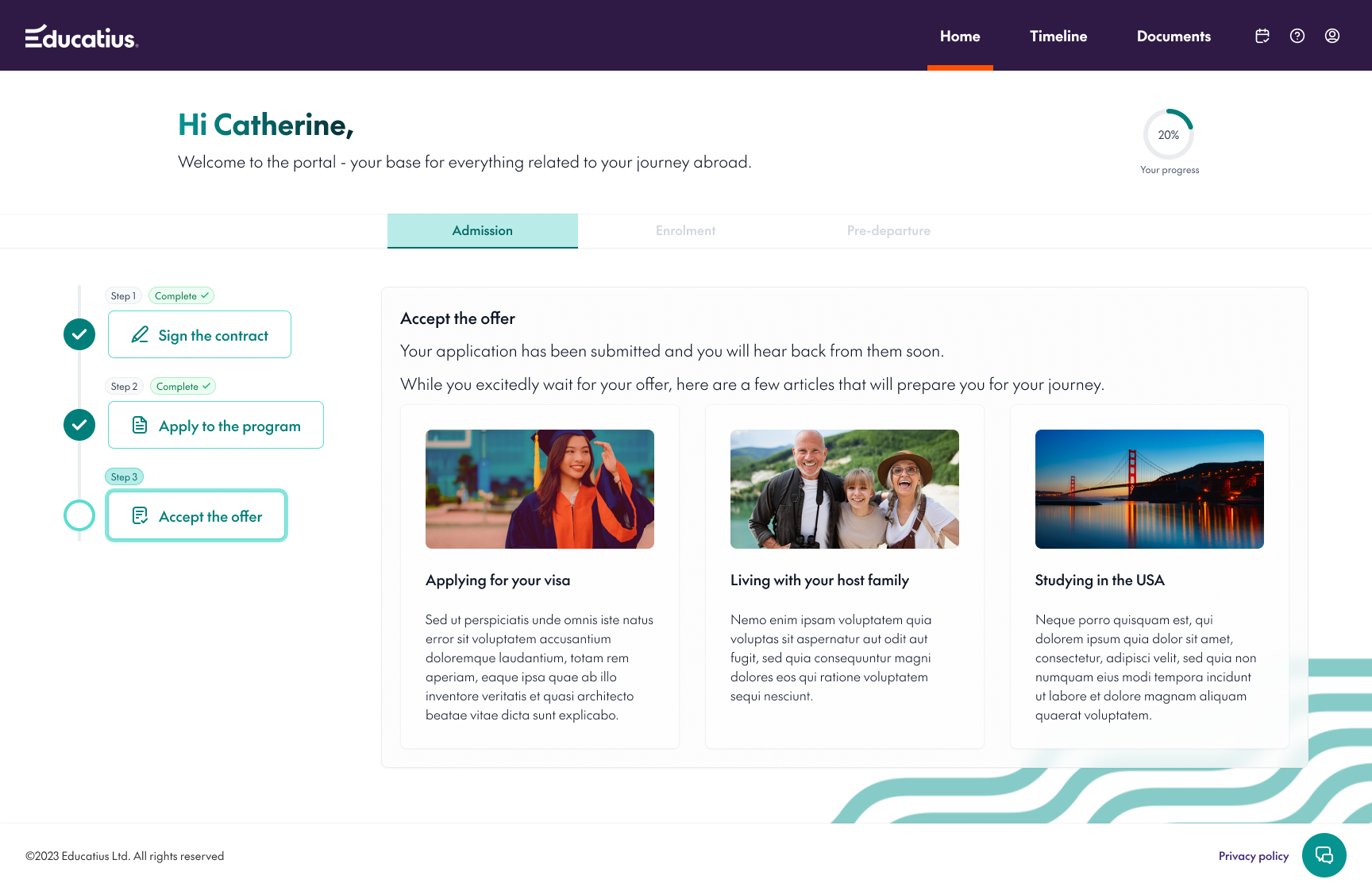
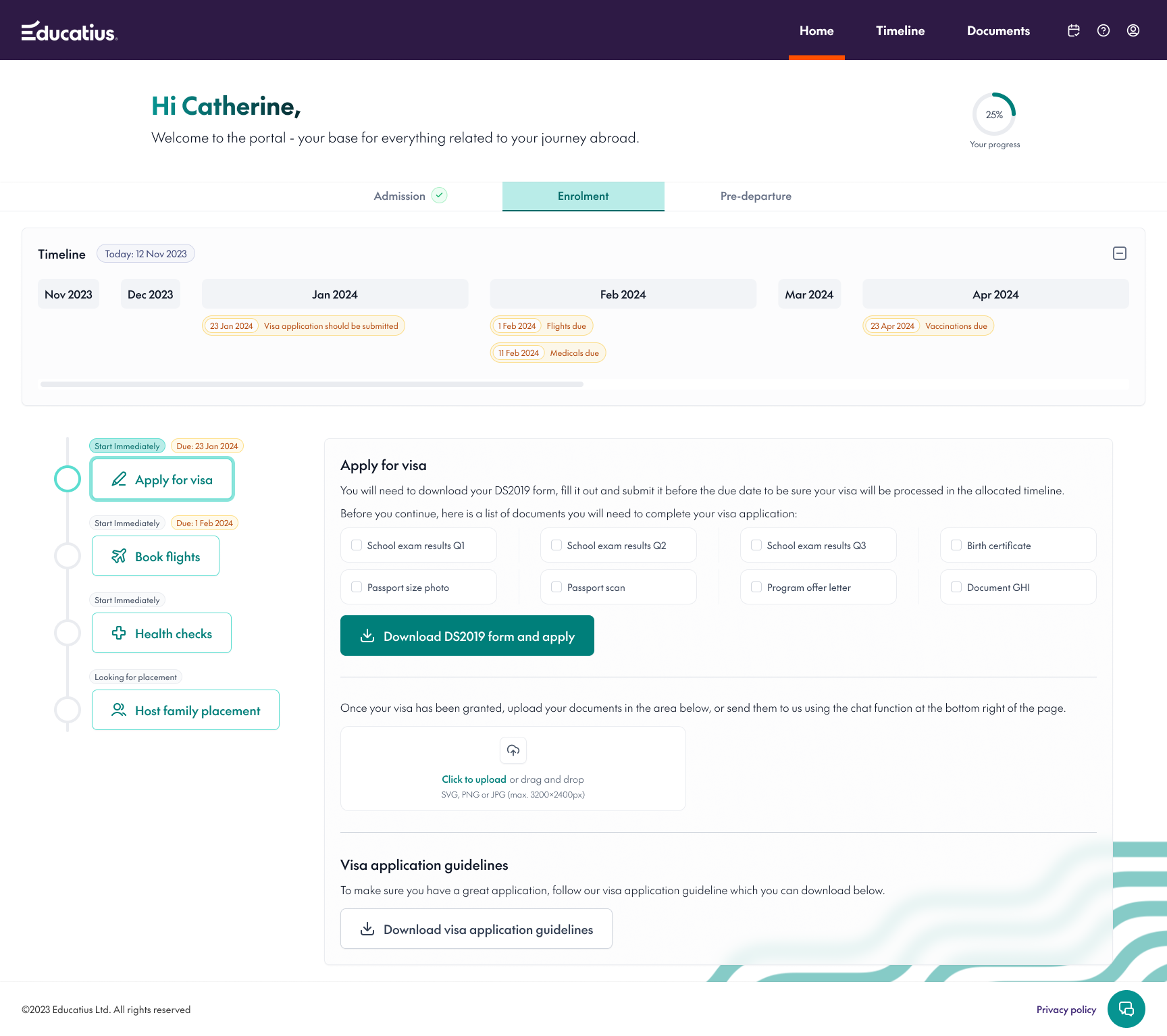
Applying to study abroad is daunting at the best of times. I interviewed current and past students and mapped their journey, stage by stage. From that came a single portal. Students find the documents and resources they need in one place. A timeline sets out what to expect at every stage. It shipped as a working portal for Educatius, an Enroller client. Juno, the full application platform being built for them, was still in development.
Built for the whole agency.
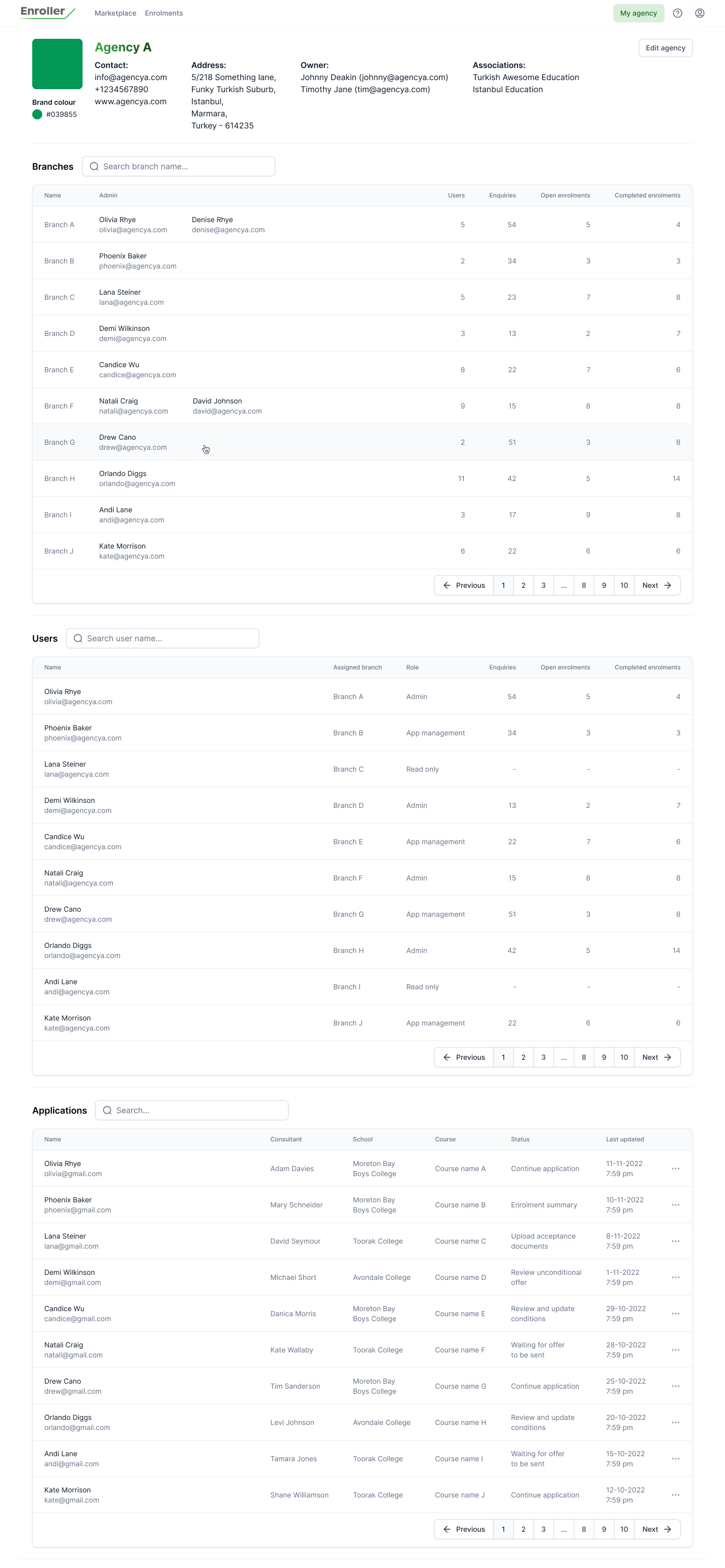
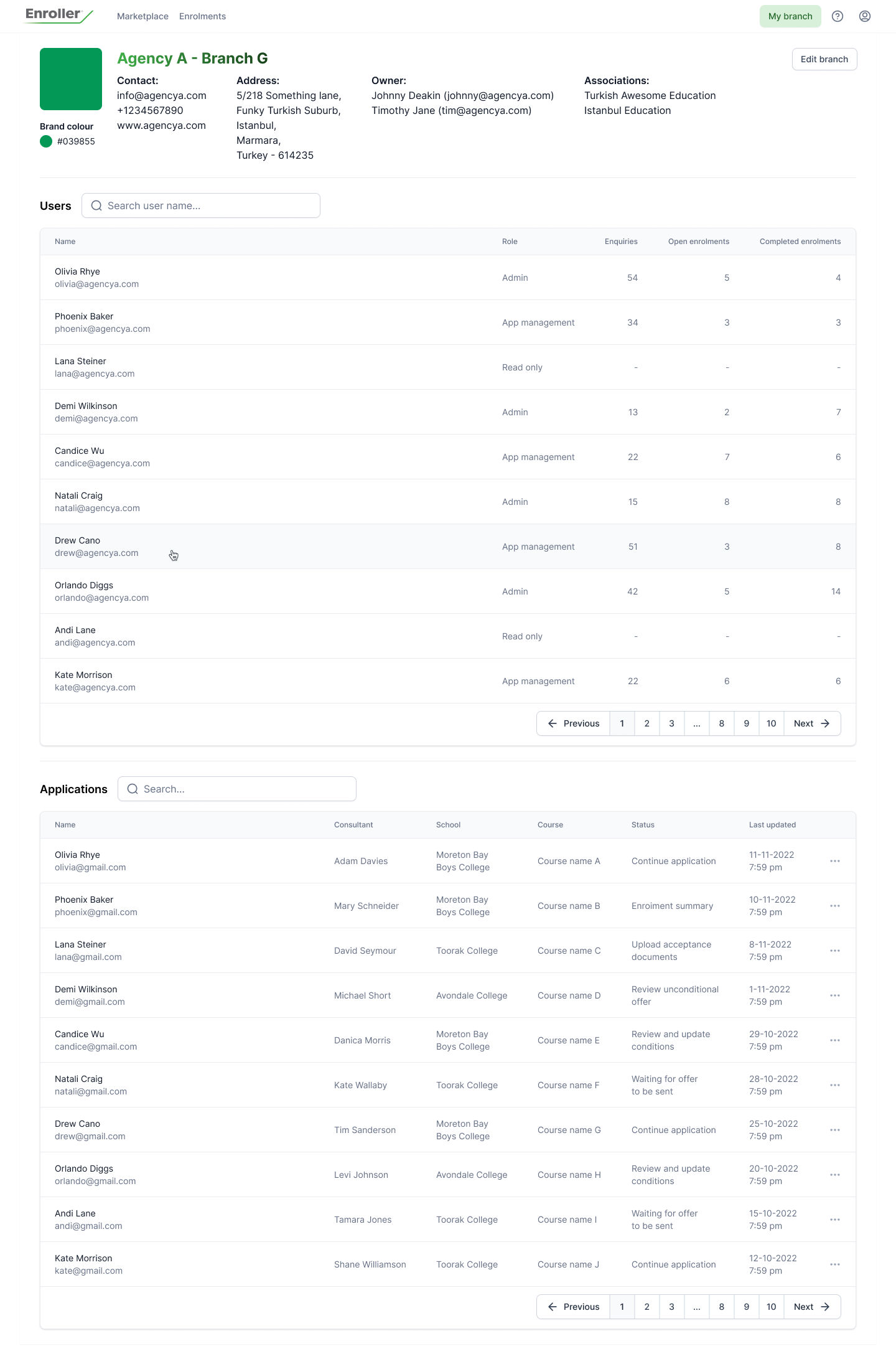
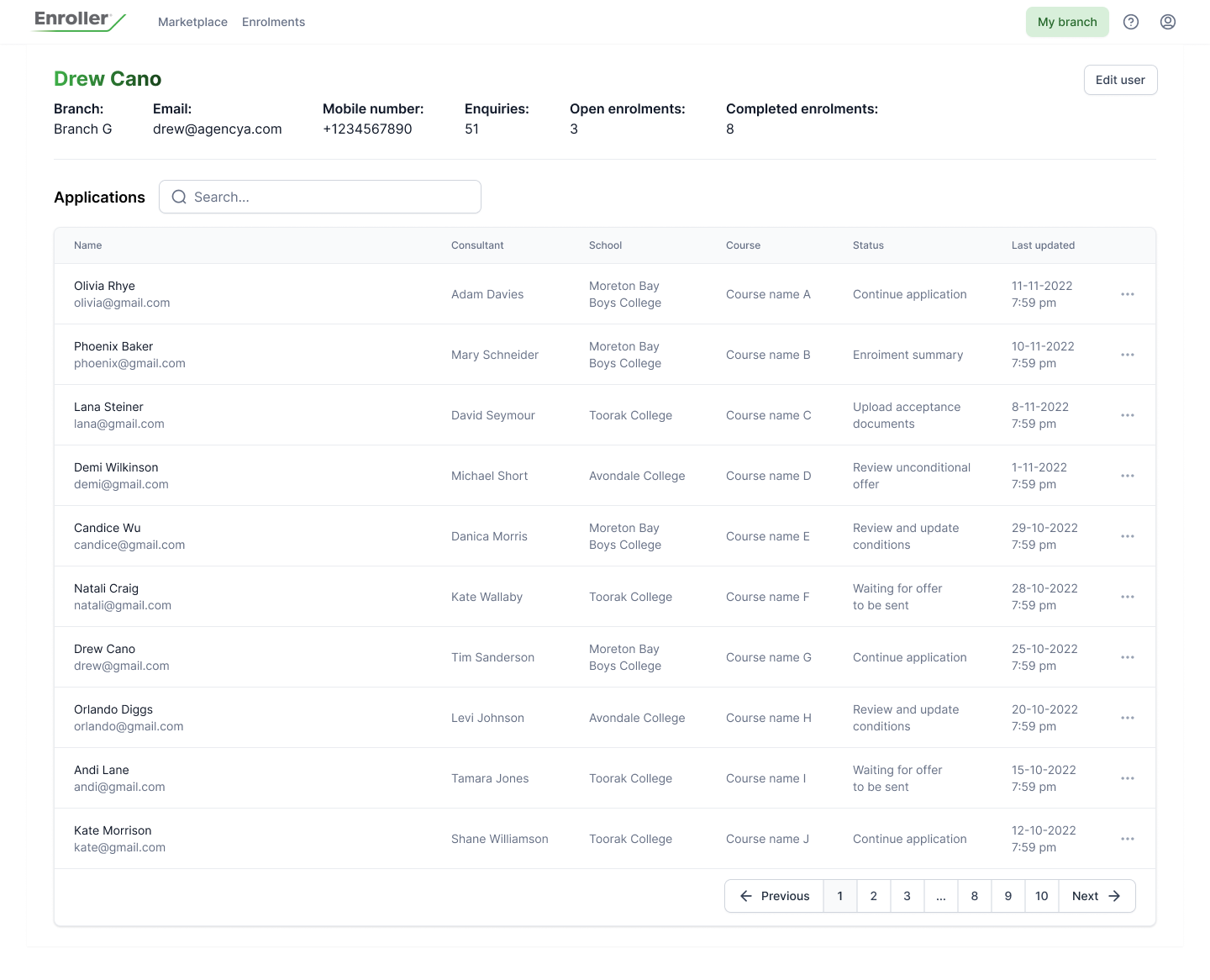
Every school in New Zealand has its own application requirements and workflow. Managing a caseload across many schools was hard enough for one agent. For an agency coordinating several agents across one branch or many, it was close to impossible. The agency system gives them the structure they were missing. The agency, its branches and its people sit in one clear hierarchy. Role levels control who can see and do what. And a student’s application can be handed from one agent to another.
The calls that mattered.
- 01Research before screens. A multi-day discovery program brought several departments to the table. Interviews and mapping sessions set out how the work really flowed, before anything was designed.
- 02Prototypes over presentations. Working prototypes, built quickly with AI, tested ideas with decision makers early. The approach went on to shape how the wider development team worked.
- 03One consistent look and feel across three brands. A shared library of designs and components, built to international accessibility standards, was rolled out across three brand platforms. Every product started from the same foundation.
The result.
Each side of the marketplace got a product built around its own job. Education agents reported students choosing their school with more enthusiasm. Agencies gained the structure to run their teams. Feedback from clients was positive, and Enroller kept its existing clients through the move to the new platform.
Have a similar project in mind?
Tell me where it stands and what you need from it, and we’ll work out the right way to approach it.