Schedgy
In many shared homes, one person ends up as the project manager. Schedgy makes that invisible work visible, and the split fair. I designed, built and launched it solo, on iOS and Android, in four months.
- Client
- Schedgy
- Role
- Founder & Product Designer - product, brand, Flutter apps, backend and go-to-market
- When
- 2025 - present
- Work
- Product Design, Brand Identity, Development
- See it
- Schedgy.app


Household chores are among the five things American couples argue about most, according to a 2022 YouGov poll. Generic to-do apps don’t help. They don’t know what a household is. They can’t rotate a job or judge whether the split is fair. And they start from a blank page.
The fight is rarely about the dishes. It’s about the mental load: tracking everything and coordinating everyone, while the others wait to be asked. Nobody can see that work, so nobody shares it. Schedgy is built for the people who feel it most. That means couples who want a fair split without the nagging. It also means ADHD and neurodivergent adults who need outside structure, with as little friction as possible.
Fair means visible.
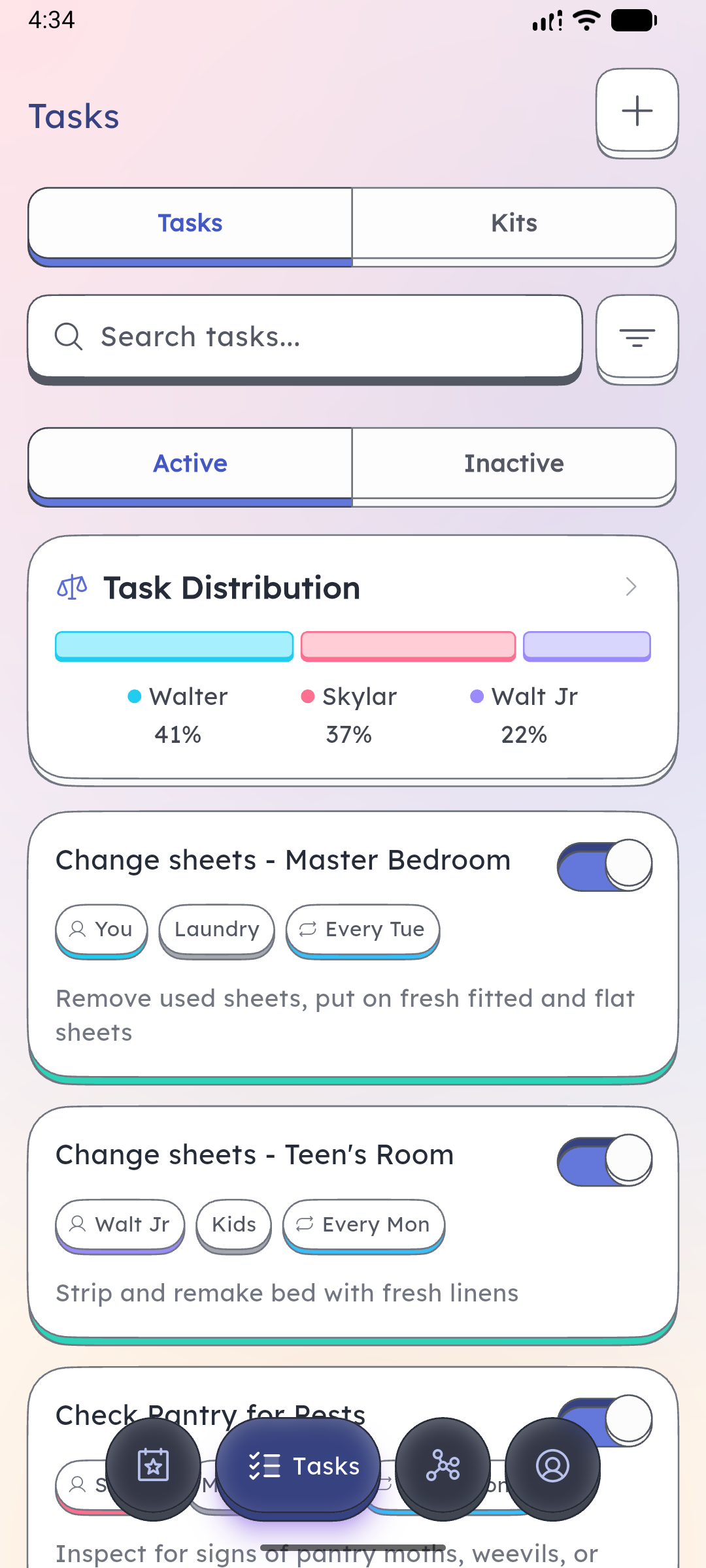
Every task carries an effort weight from 1 to 10. Schedgy shares out the work to keep the load even. So one partner can’t quietly collect the heavy jobs while the split still looks fair by count. Balance shows as simple percentage bars. Households run on member slots. A couple can set up the whole split before the second partner installs the app. Kids can hold a slot without an email address or a phone.
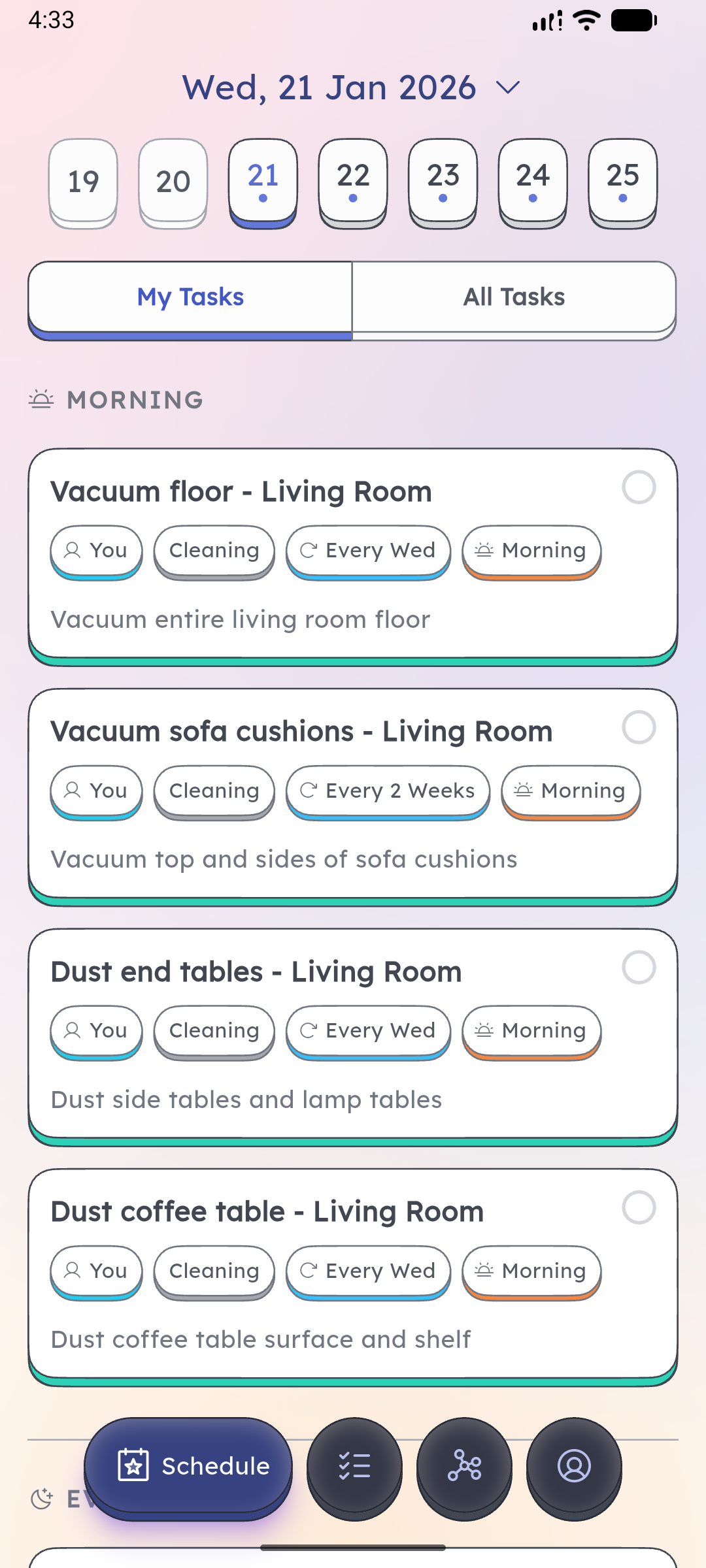
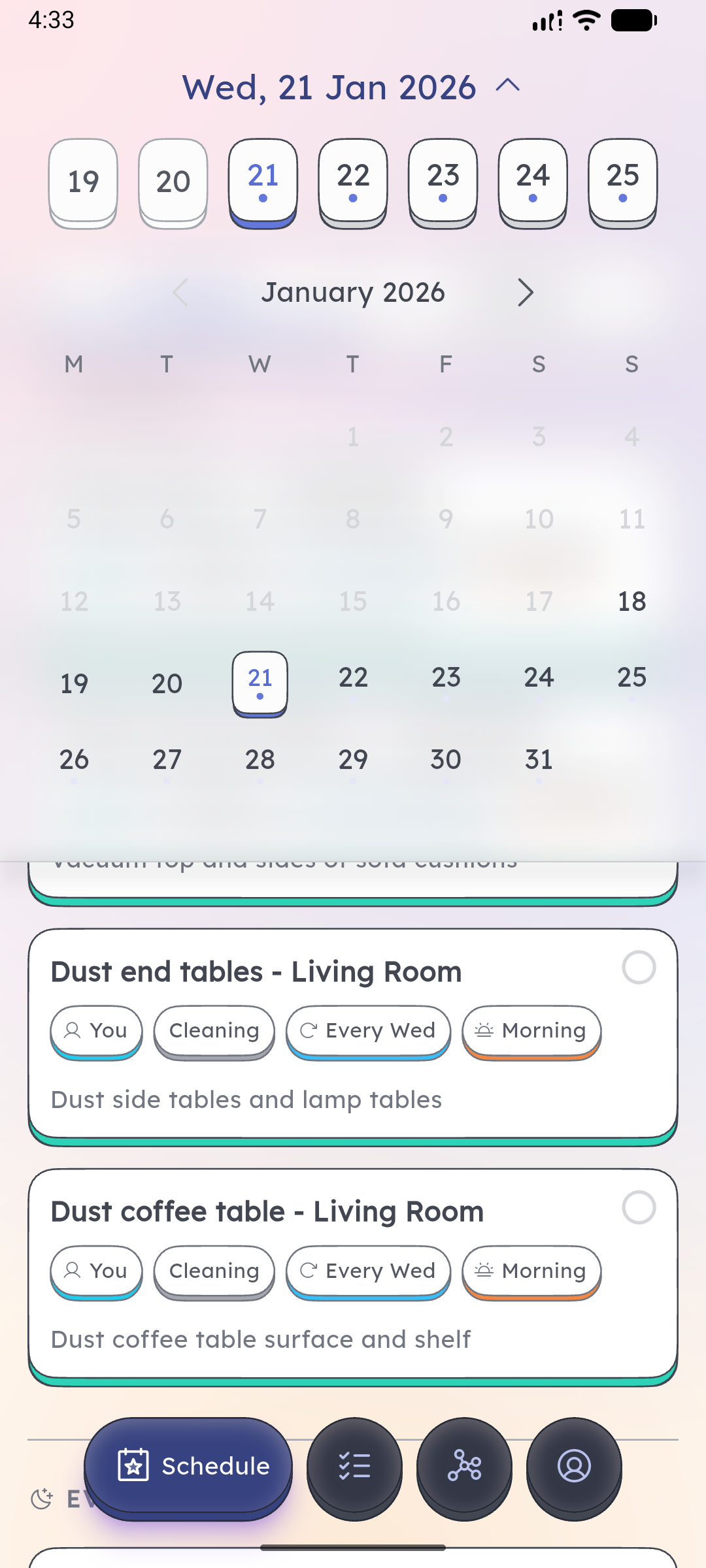
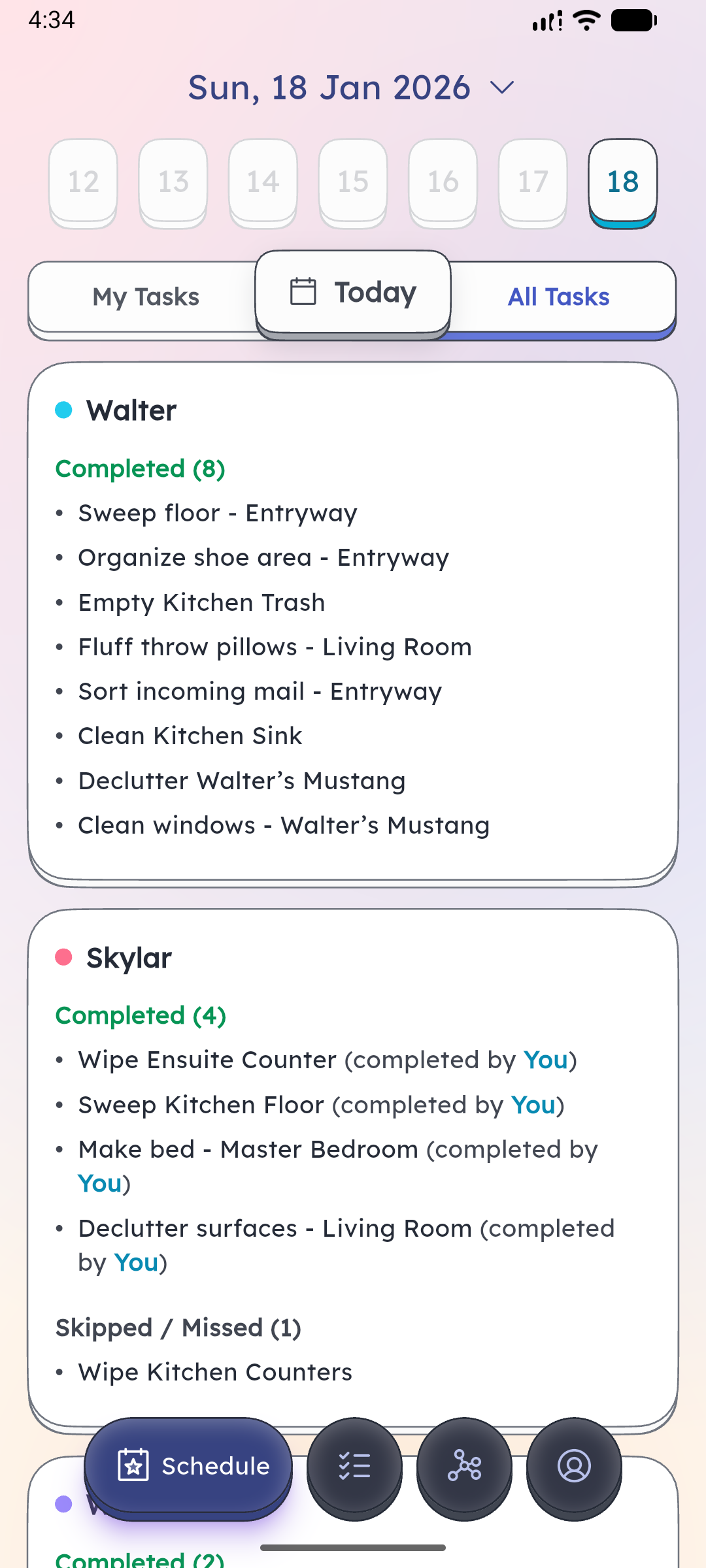
No blank page.
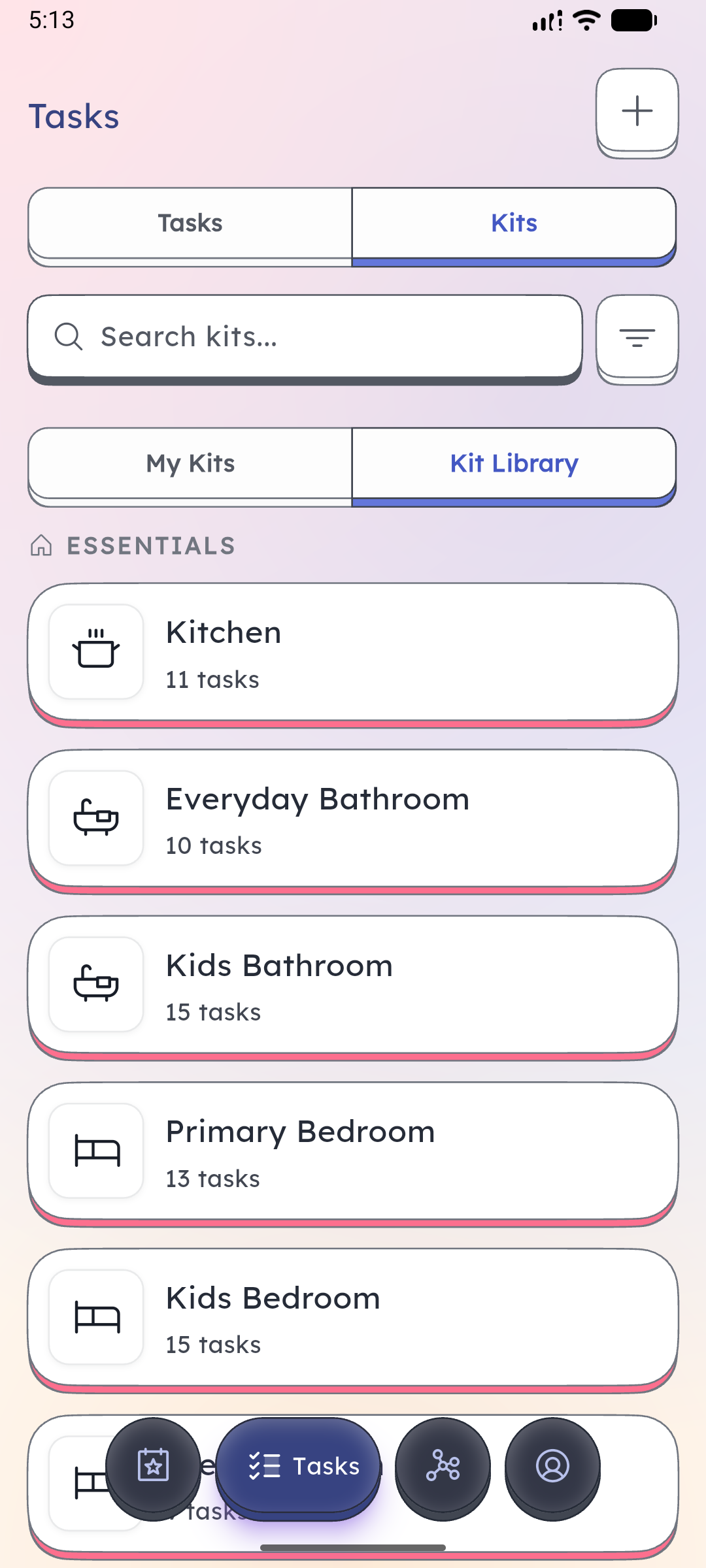
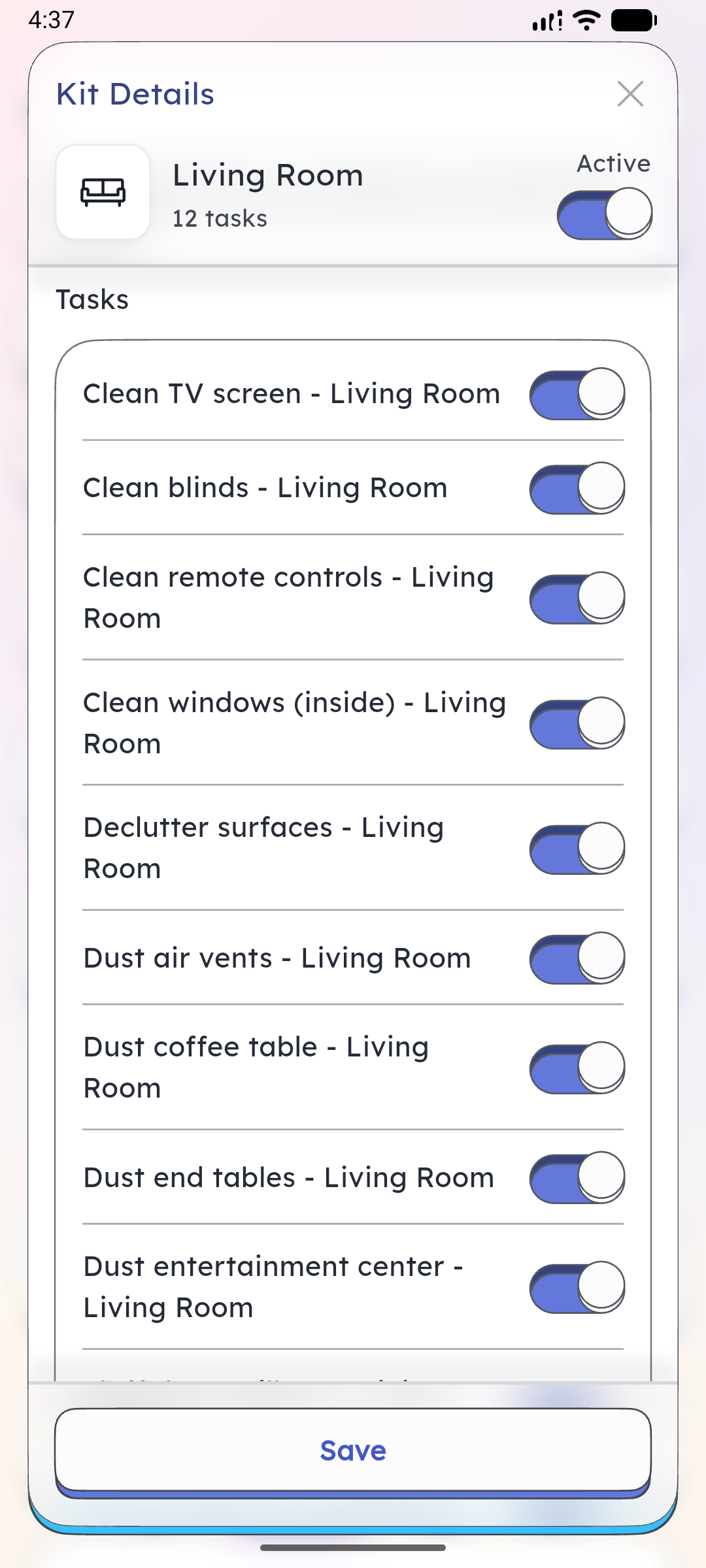
An empty list is the hardest place to start, so Schedgy hands new households a full one. It ships with 31 ready-made kits for rooms, life events and seasonal routines. They draw on a hand-built library of more than 1,600 household tasks, each tagged by room, category and effort. A short personality quiz tunes the suggestions. Whole kits switch on or off as life changes.
Nobody owns the toilet forever.
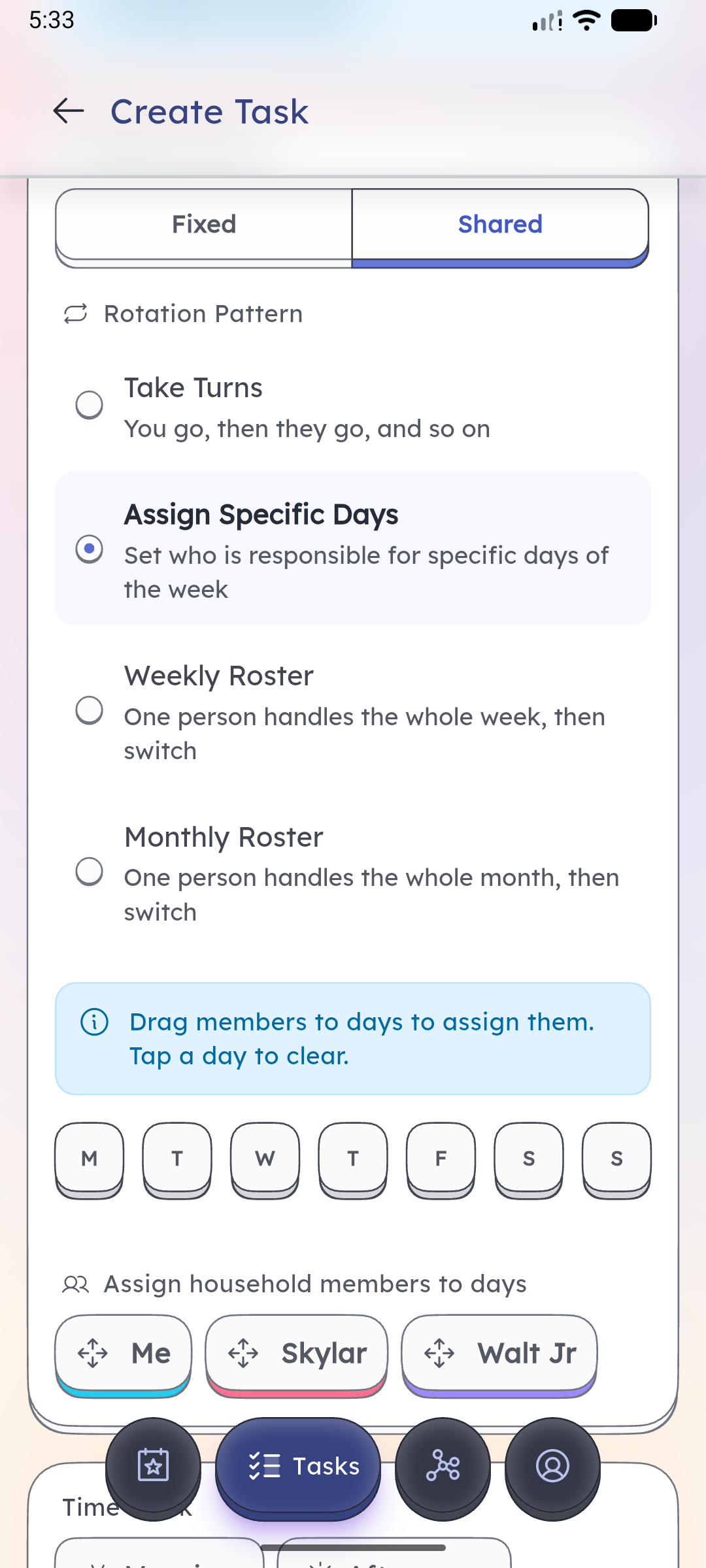
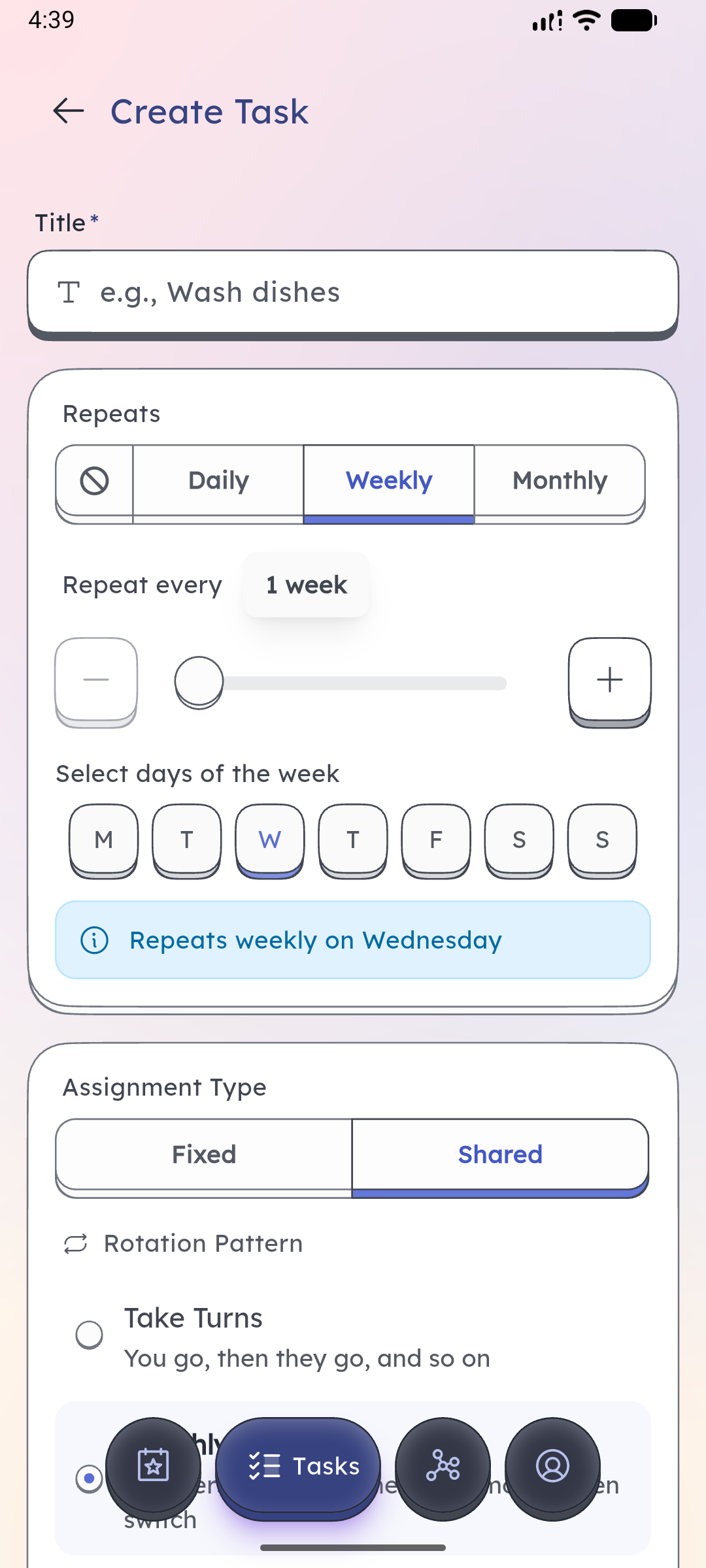
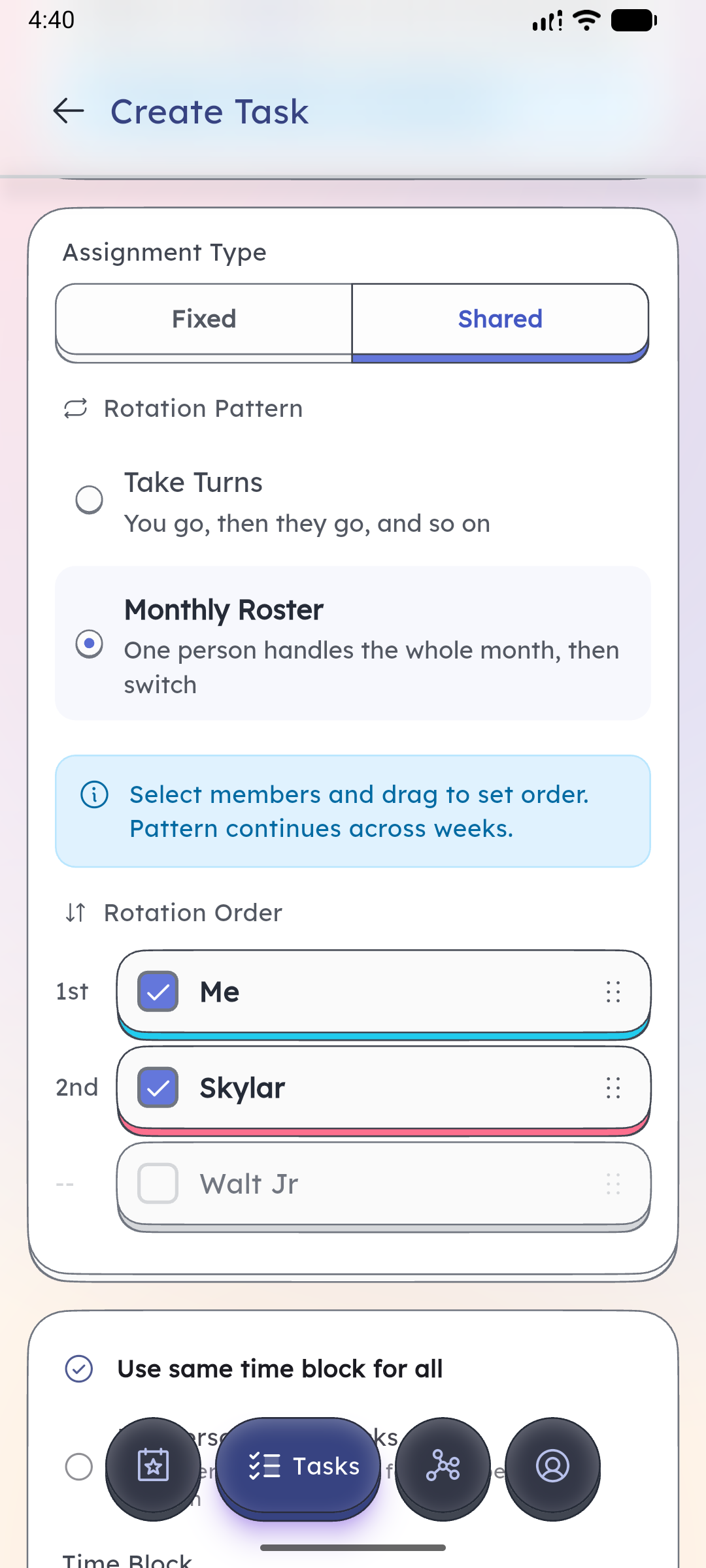
Rotation turns fairness from a negotiation into a default. Four patterns (alternating, weekly, monthly and by day) keep recurring jobs moving between members. Schedgy works out whose turn every future occurrence is. It keeps working as people join, leave or swap slots.
Coordination, not competition.
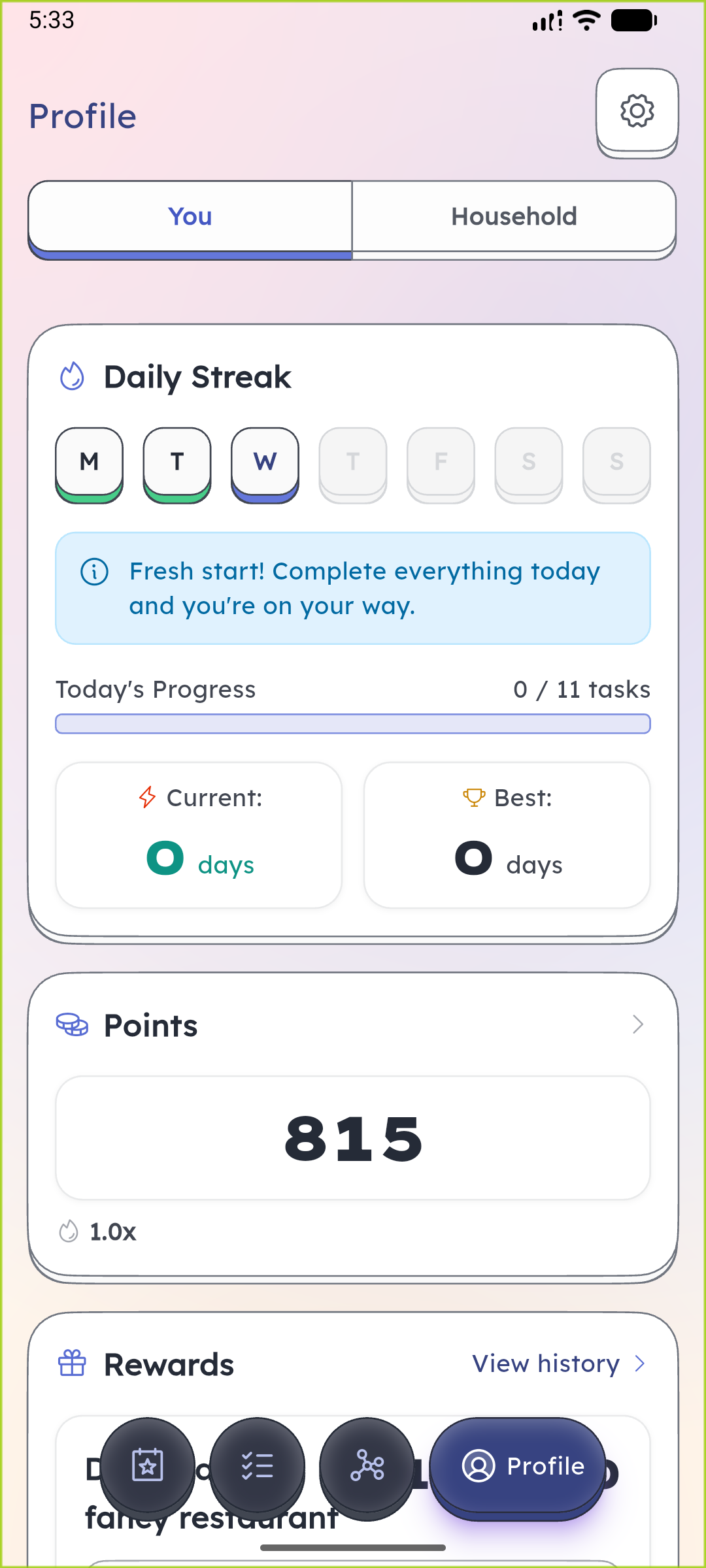
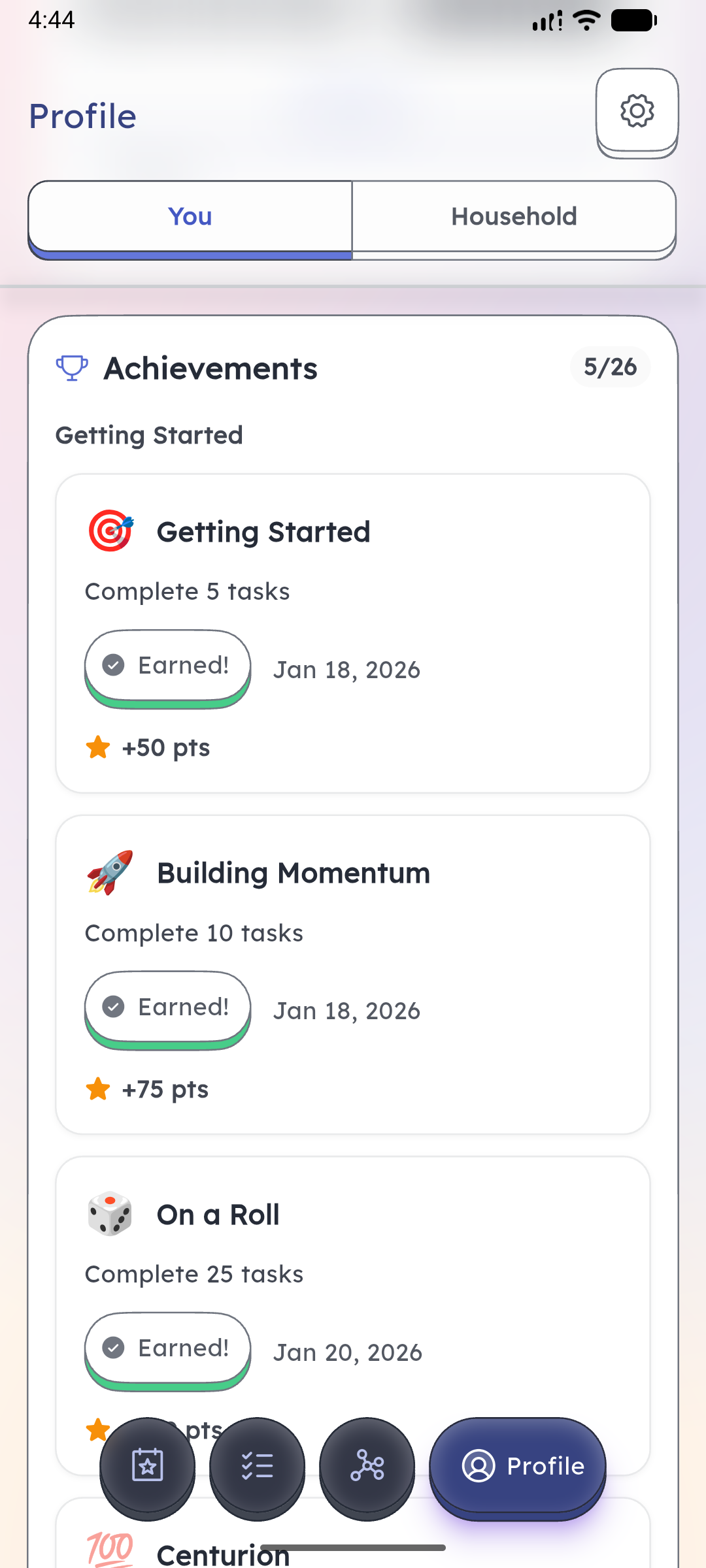
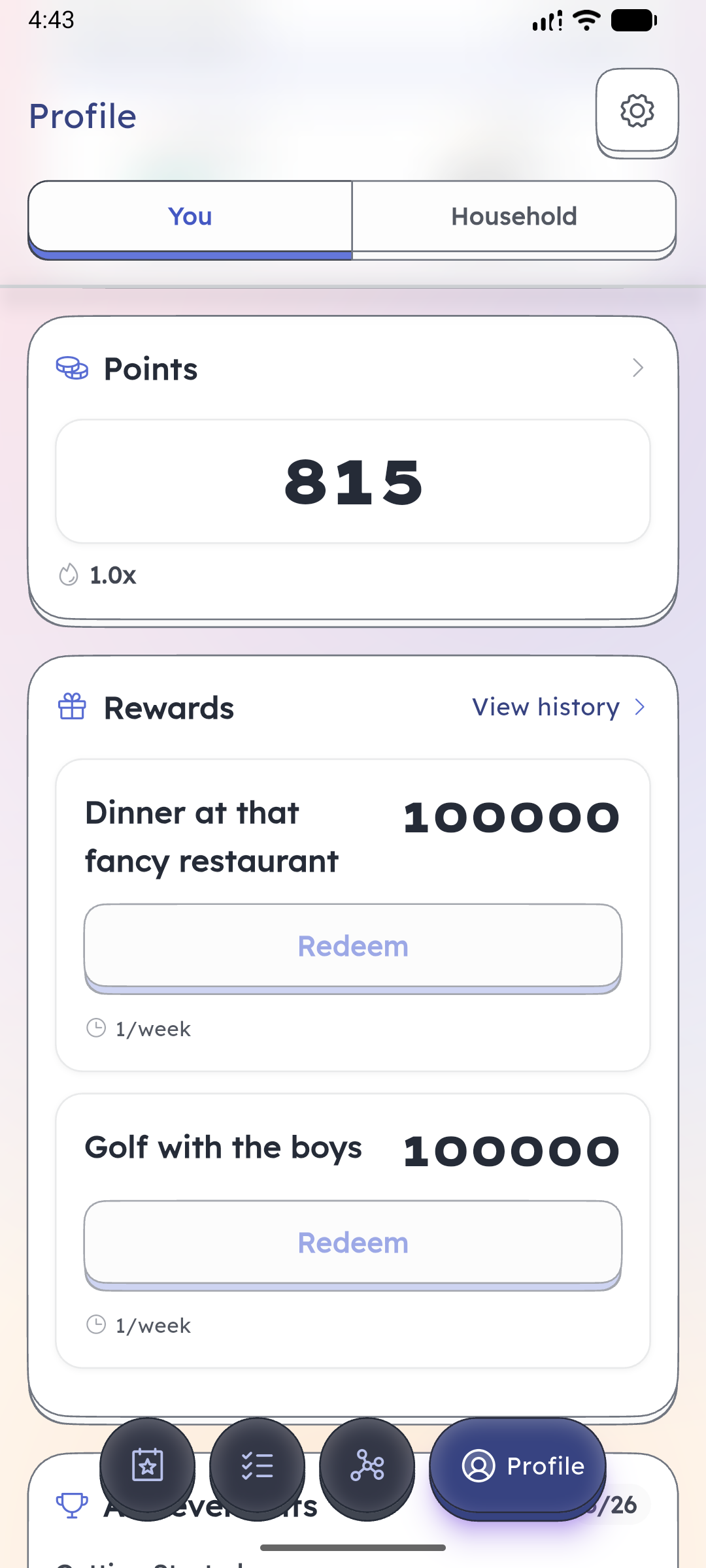
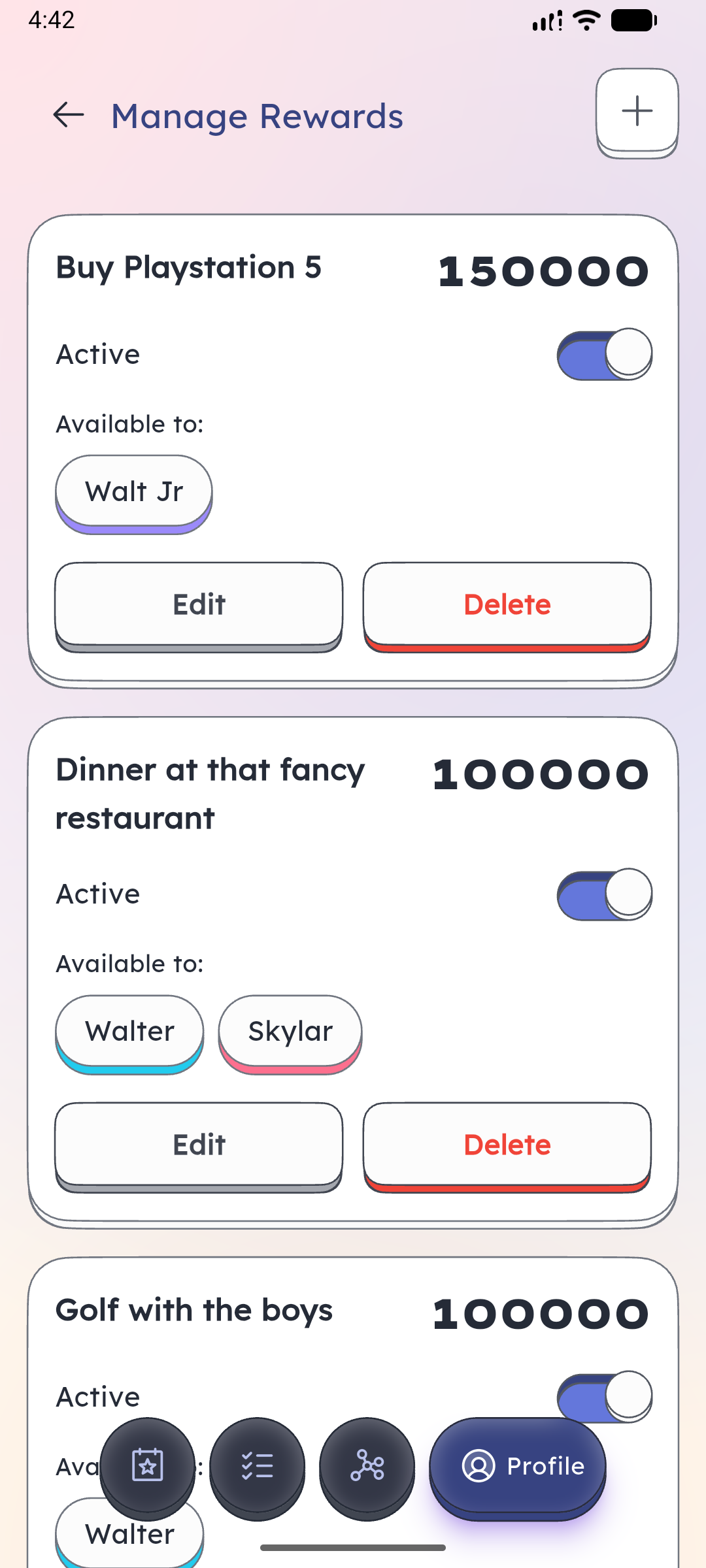
The game is played as a household. The streak counts days in a row at 100% for the whole home. A 24-hour grace period and earnable shields cover the days when life happens. Points scale with effort, achievements mark milestones and households choose their own rewards. Leaderboards were designed, then cut. Ranking partners against each other would bring back the very scorekeeping Schedgy exists to end.
The calls that mattered.
- 01Free for two, paid for more. Two-person households use Schedgy free. One Schedgy Plus subscription covers a household of up to eight. The 14-day trial is exactly two weekly rotations, long enough for both partners to feel it working before anyone pays.
- 02Logic that can’t be wrong. Repeating tasks and rotation are worked out by separate, heavily tested code. “The third Wednesday of the month” has to land on the right Wednesday, every time.
- 03Translated in full, or not at all. Seven language versions cover more than 1,500 pieces of text. An automatic check stops a half-finished translation from shipping.
The result.
Schedgy is live on the App Store and Google Play. Over eight development phases, a new release shipped every few days. Each one added a piece, from sign-in and repeating tasks to rotation, kits and rewards. It was all built by one person, with AI as a coding partner. The next phase is growth, through creators in the ADHD and couples communities.
months from first commit to public launch1
downloads on the App Store2
active users in the last 28 days3
- 1. Project history. First commit 5 November 2025, public launch 10 March 2026.
- 2. App Store Connect, total downloads, 18 February to 9 October 2026.
- 3. RevenueCat, active customers in the 28 days to October 2026.
Have a similar project in mind?
Tell me where it stands and what you need from it, and we’ll work out the right way to approach it.