Greenheart Exchange
Every exchange season, thousands of applications pass through a chain of reviewers in the US and abroad. The feedback used to travel by email. Now it sits on the application, pinned to the exact field it concerns. That saves 3-5 hours of work on every application.
- Client
- Greenheart Exchange
- Role
- Product Design Lead (via Enroller) - design and product direction for Greenheart GO
- When
- 2022 - 2025
- Work
- Product Design, Research
Greenheart Exchange runs international exchange and internship programs across the US. Its applications lived in the platform, but the reviews lived in email. Applicants guessed at what to fix. Only whoever held the thread knew where an application stood. And every round trip added days.
As sole product designer on Greenheart’s platform overhaul, I began by mapping how an application travels. Who starts it, who touches it and in what order? Who needs to know when something changes? Two principles came out of it. Feedback belongs on the thing it describes. And whoever can fix a problem fastest should be free to fix it.
Feedback lives on the field.
Reviewers comment on the exact field or section that needs work. They send everything in one action. On a student application, the Sending Organization reviews first, then Greenheart. Greenheart’s comments reach both the student and the Sending Organization, and either can make the fix. So an application never waits on one person. Every section shows its state, so any colleague can pick up a review where someone else left off.
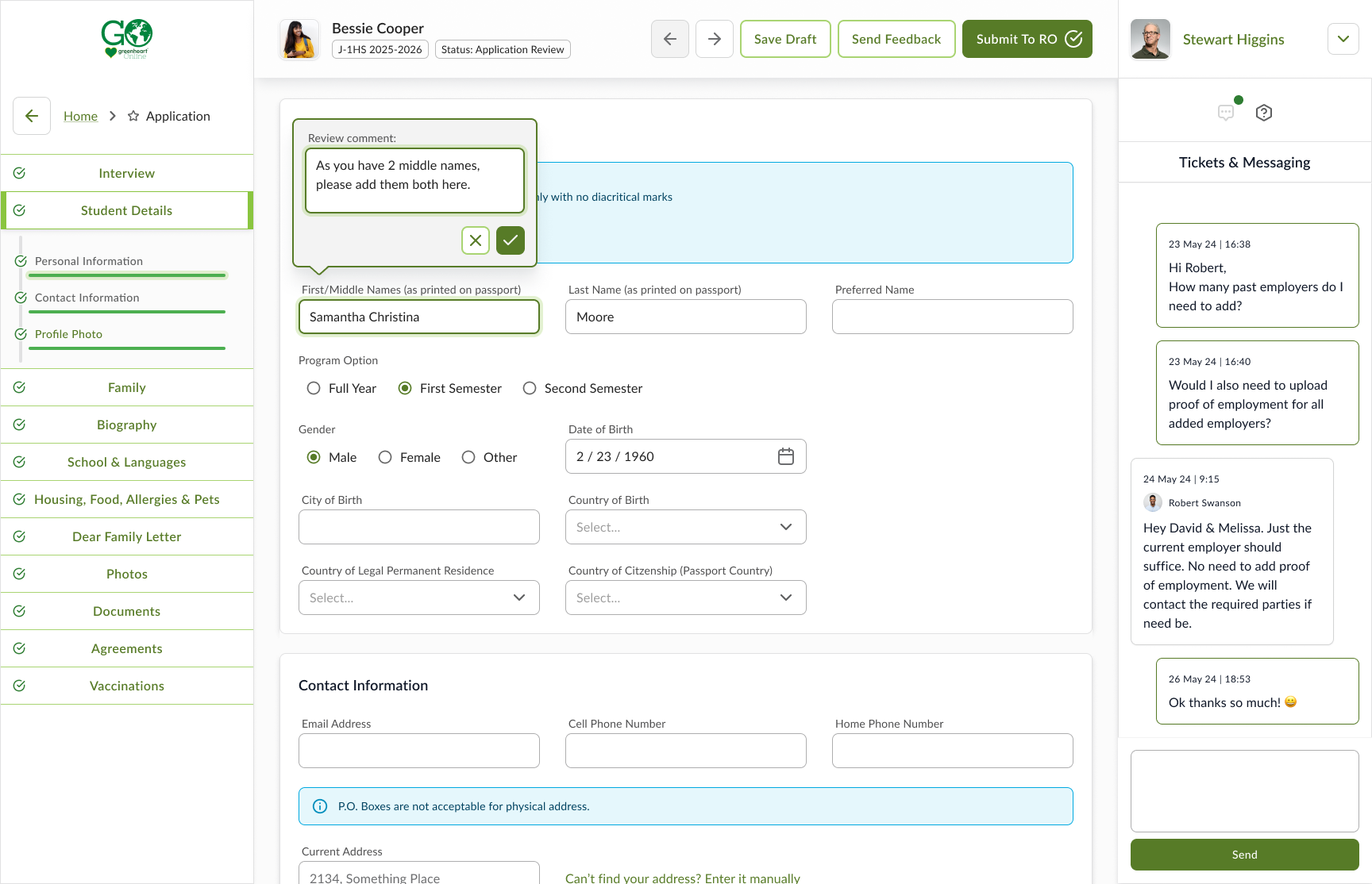
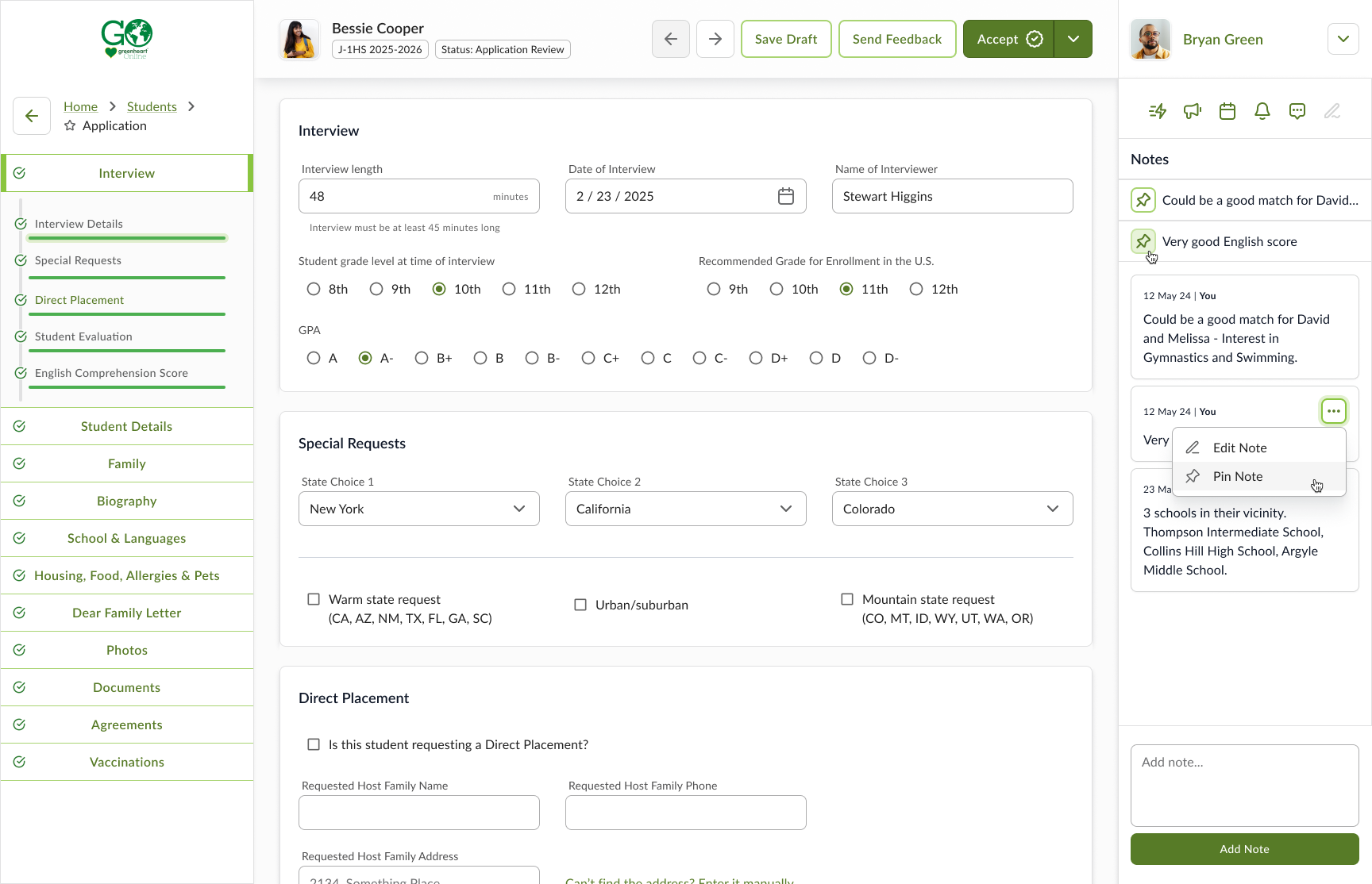
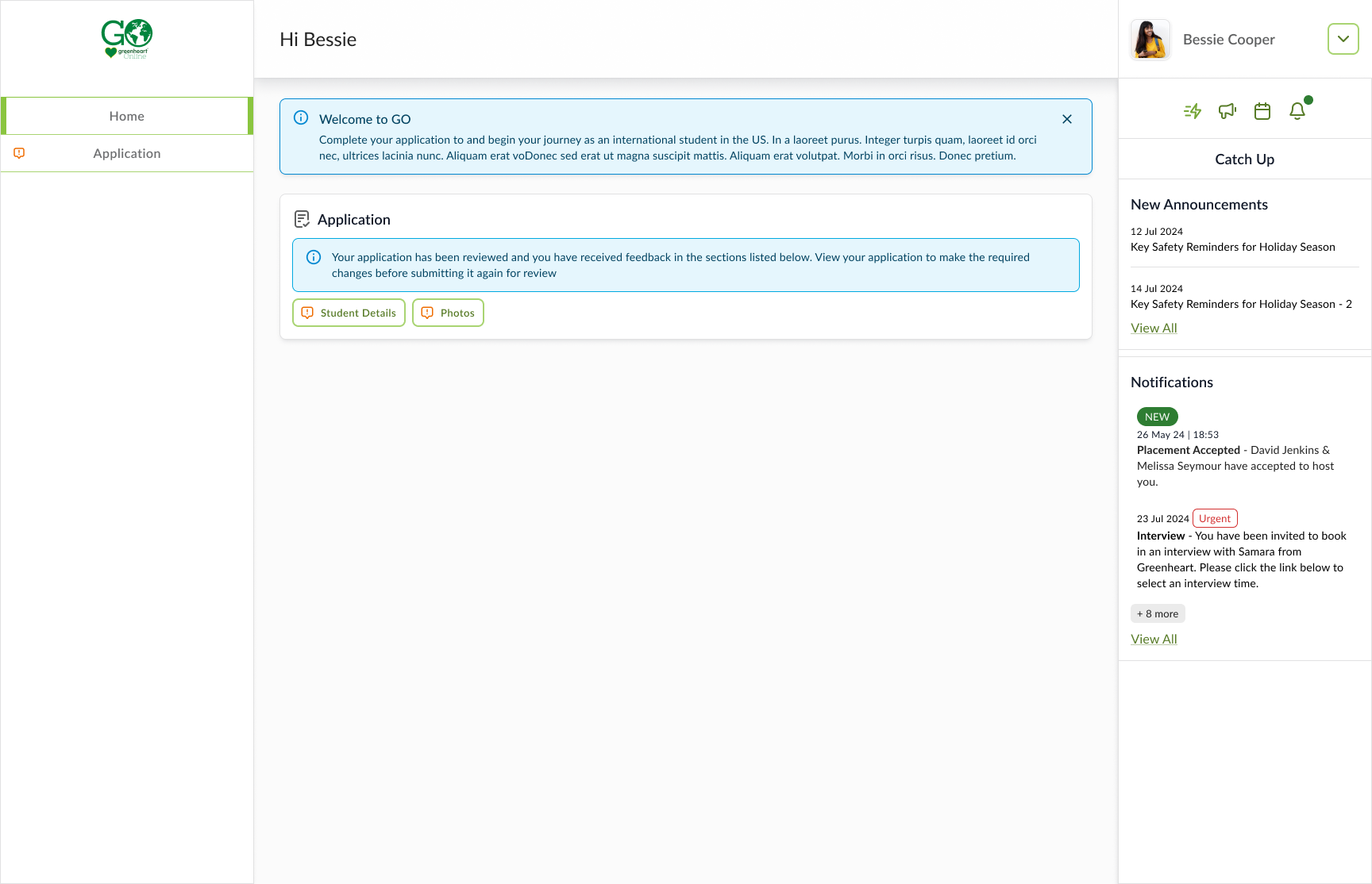
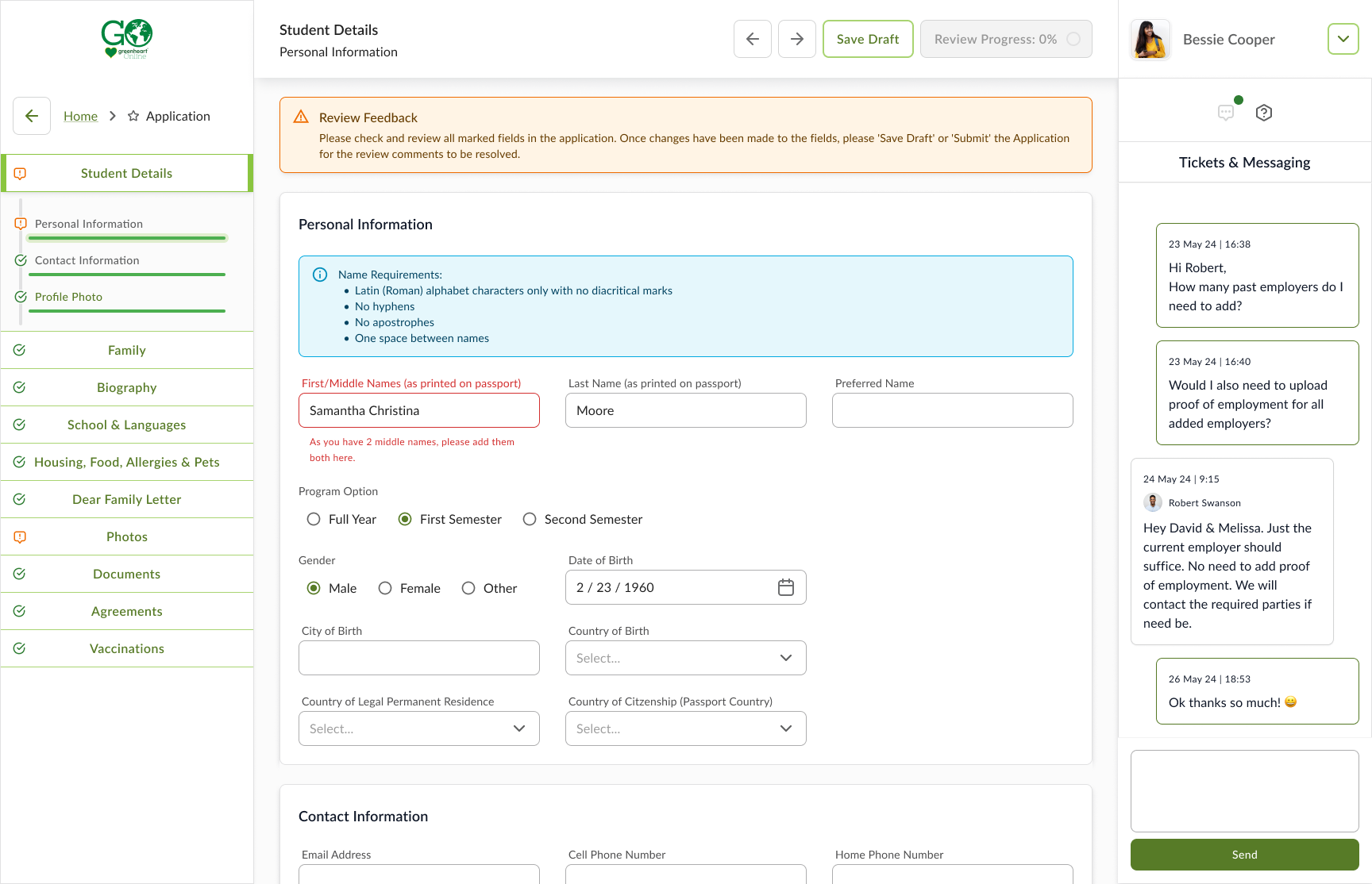
One pattern, a taller ladder.
Host family applications use the same review screen, the same field-level comments and the same dashboards. The ladder is just taller: Local Coordinator, Regional Director, Executive Regional Director, then Greenheart. Each level’s feedback reaches every level below it, so whoever can fix it fastest does. A resubmitted application goes straight back to the level that asked for the change. The family sees one clear list of what to fix. On final approval, their dashboard switches to hosting mode.
Matching is a judgement call.
Approval is only half the job. Local Coordinators then place each student with a family for a semester or a year. That pairing takes judgement, so the platform supports it rather than making it. Coordinators see the season’s placements against their goal at a glance. They filter students by program, status and interests, then present, hold or place from one menu. A family’s record puts references, background checks and past seasons on one page. Possible matches show what student and family share, as plain tags. The coordinator decides.


The visit happens on a phone.
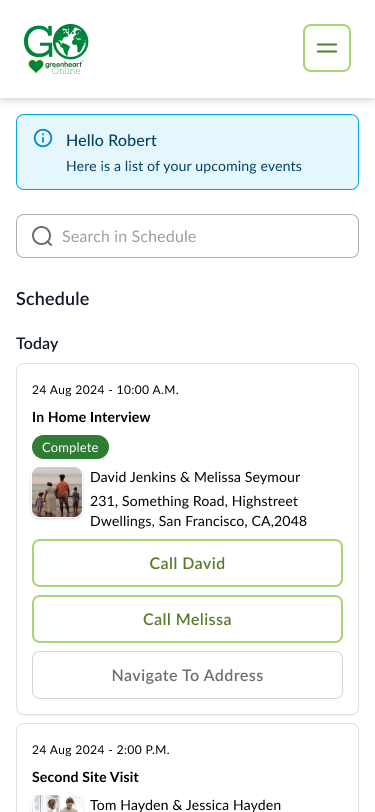
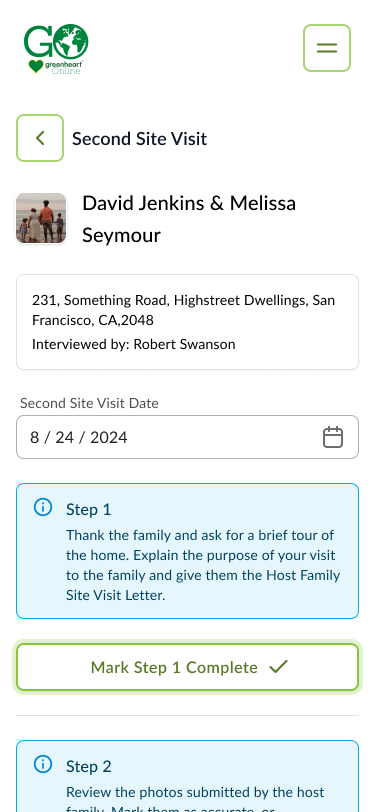
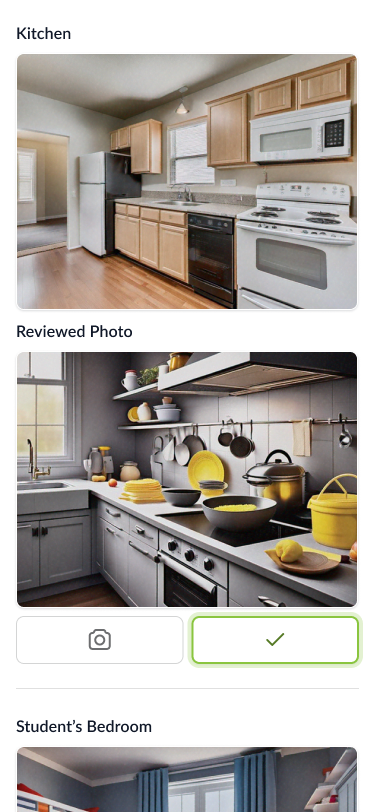
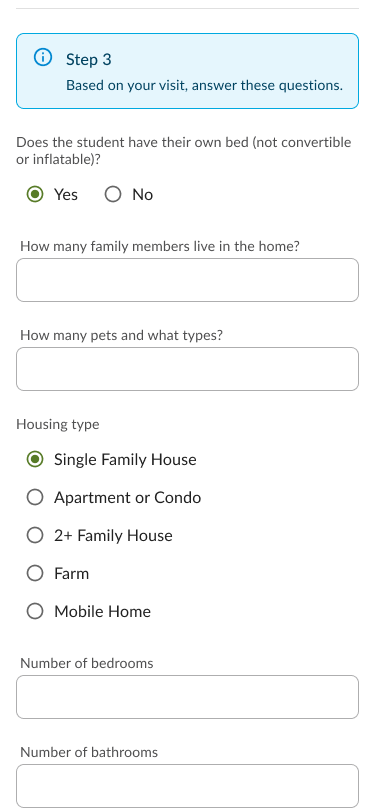
Coordinators spend much of their week in people’s homes. Interviews, site visits and check-ins with students all happen on the road. So their schedule works on a phone. Each visit can call the family, open directions or start the form. The site visit walks through the home step by step. The family has already sent a photo of each room. The coordinator confirms each one, or retakes it if it doesn’t match. A few questions about the home, and the visit is filed on the spot.
The calls that mattered.
- 01Comments on each field over one long thread. A single conversation per application is simpler to build. But it recreates the email problem inside the product. Field-level comments took more design, and bought parallel work and precise fixes.
- 02One review screen for seven roles. Seven custom screens would have meant seven things to learn and maintain. Every role gets the same view, with its own sections and actions.
- 03Fewer notifications, better aimed. Telling everyone about everything teaches people to ignore notifications. Each comment goes only to the people who can act on it or answer for it.
The result.
Keeping feedback on the platform took the guesswork out for applicants and the handovers out for staff. The review system shipped as part of the full overhaul of Greenheart’s platform. That covered recruitment, applications, placement and on-program management.
of work saved on every application1
- 1. Estimate by Greenheart’s applications approval team, per application, after launch.
Have a similar project in mind?
Tell me where it stands and what you need from it, and we’ll work out the right way to approach it.