Shubh
The kitchen was thriving. The business ran on whiteboards, spreadsheets and memory. Shubh now has an editorial storefront and, behind it, an operations platform. It reads every supplier invoice, answers the owner’s questions in Slack and returns around two hours a day.
- Client
- Shubh Restaurant & Takeaway
- Role
- Product Design Consultant - discovery, design and full-stack build
- When
- 2026
- Work
- Systems & Automation, Web Design, AI Assistants, Development
- See it
- shubh.co.nz
Shubh is a long-running Indian restaurant and takeaway in Sandringham, Auckland. Two years of invoices from 11 suppliers sat in an inbox. Stock was reordered in a panic. And the owner had no way to ask her own business a question.
I started in the kitchen, alongside the owner. What do you buy, from whom and how often? What keeps you up at night? The answers set the brief. Know what to buy and when. See when a supplier’s prices drift. Stop running the business in permanent catch-up. Everything she needed was already there. It was locked in hundreds of PDFs, each in its own layout. Sales sat in a till that couldn’t connect what was bought to what was sold.
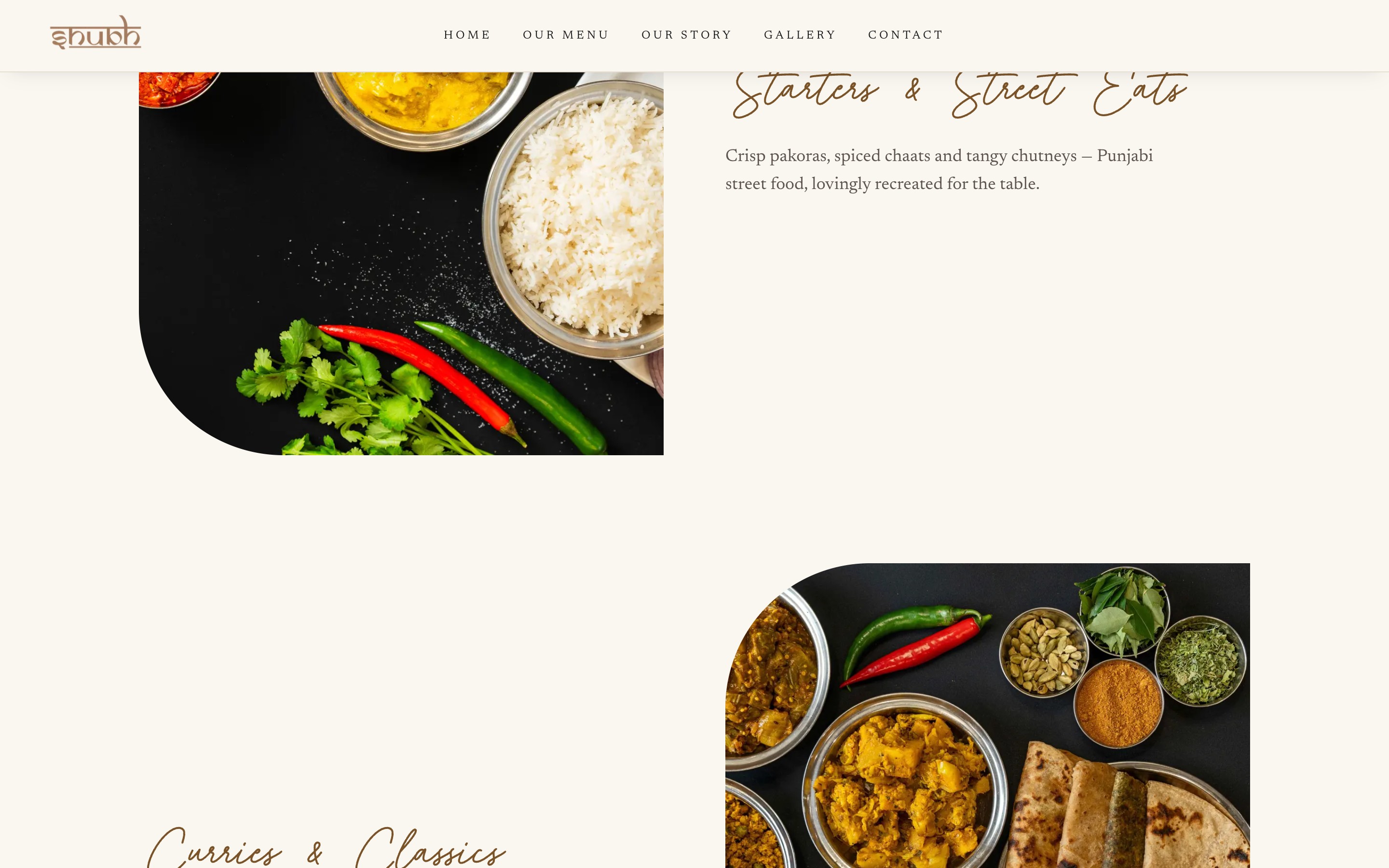
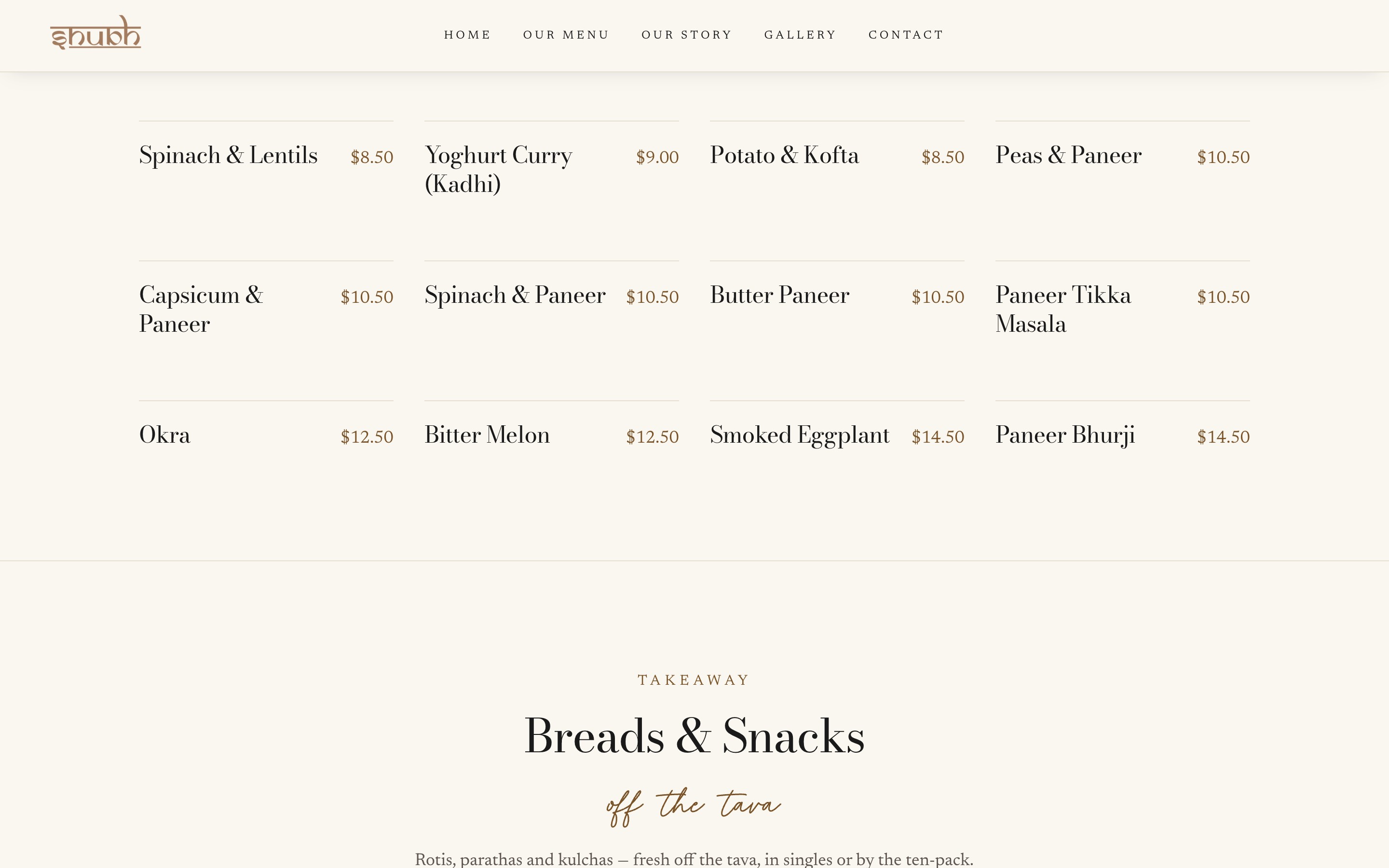
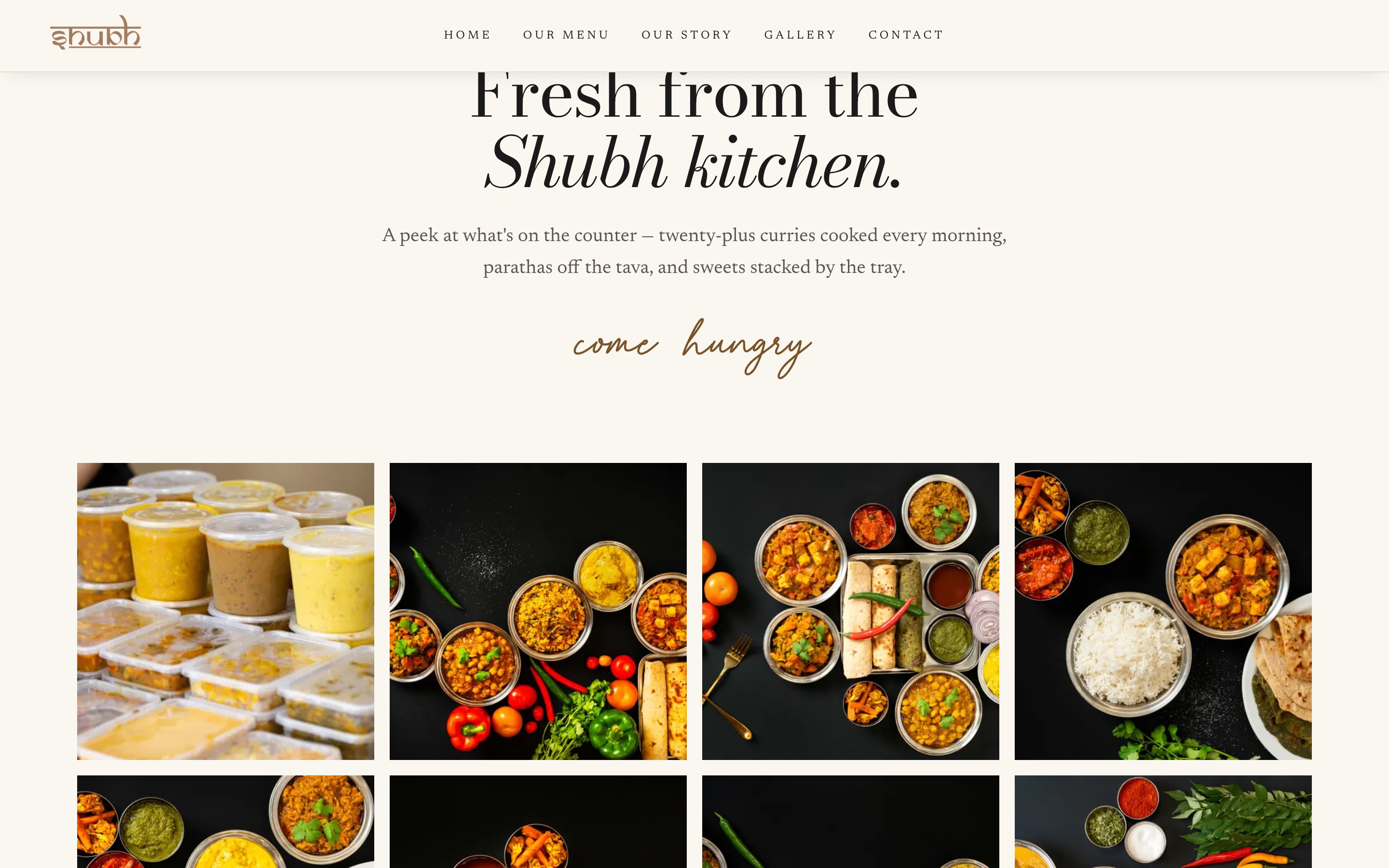
A takeaway worth lingering on.
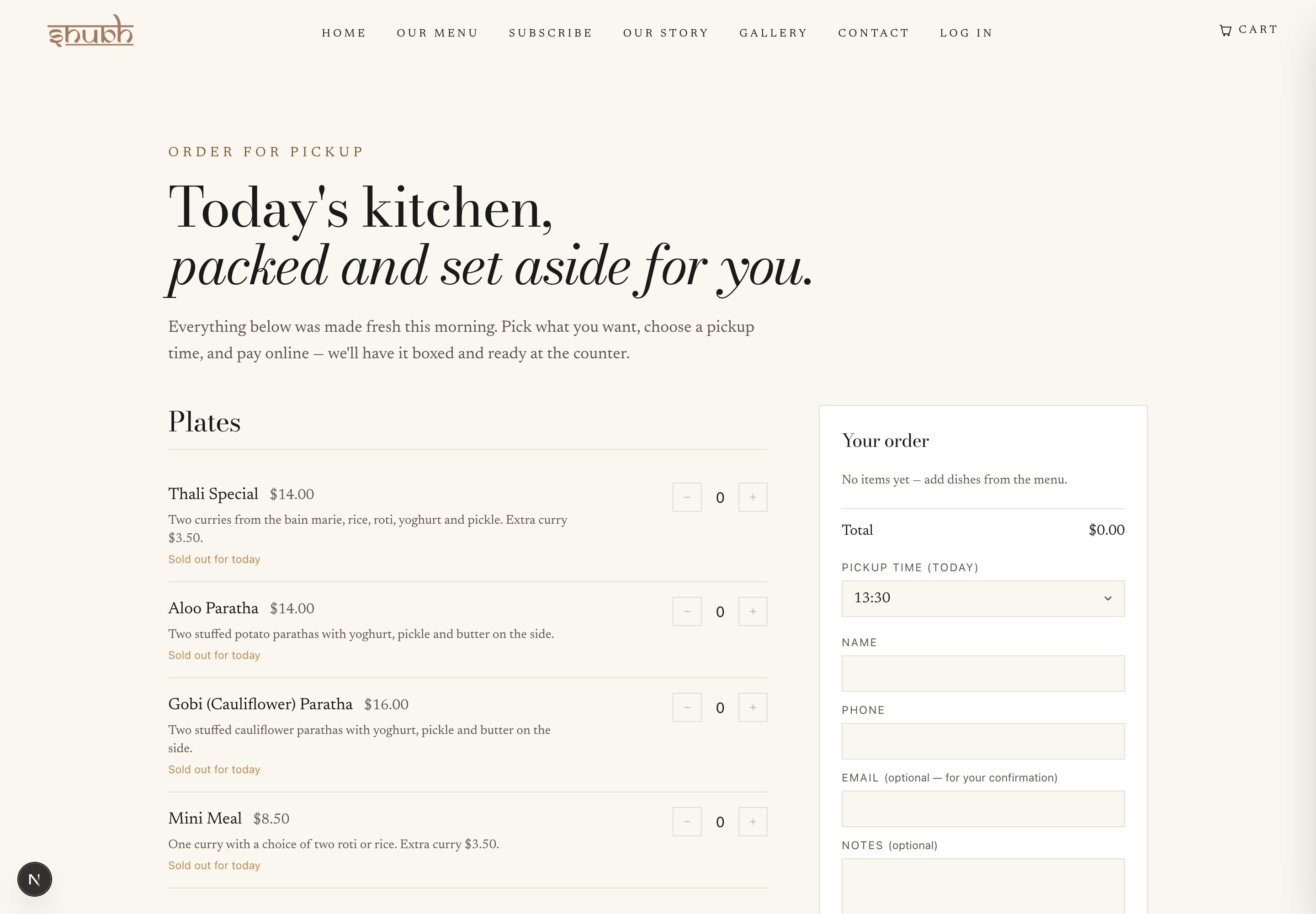
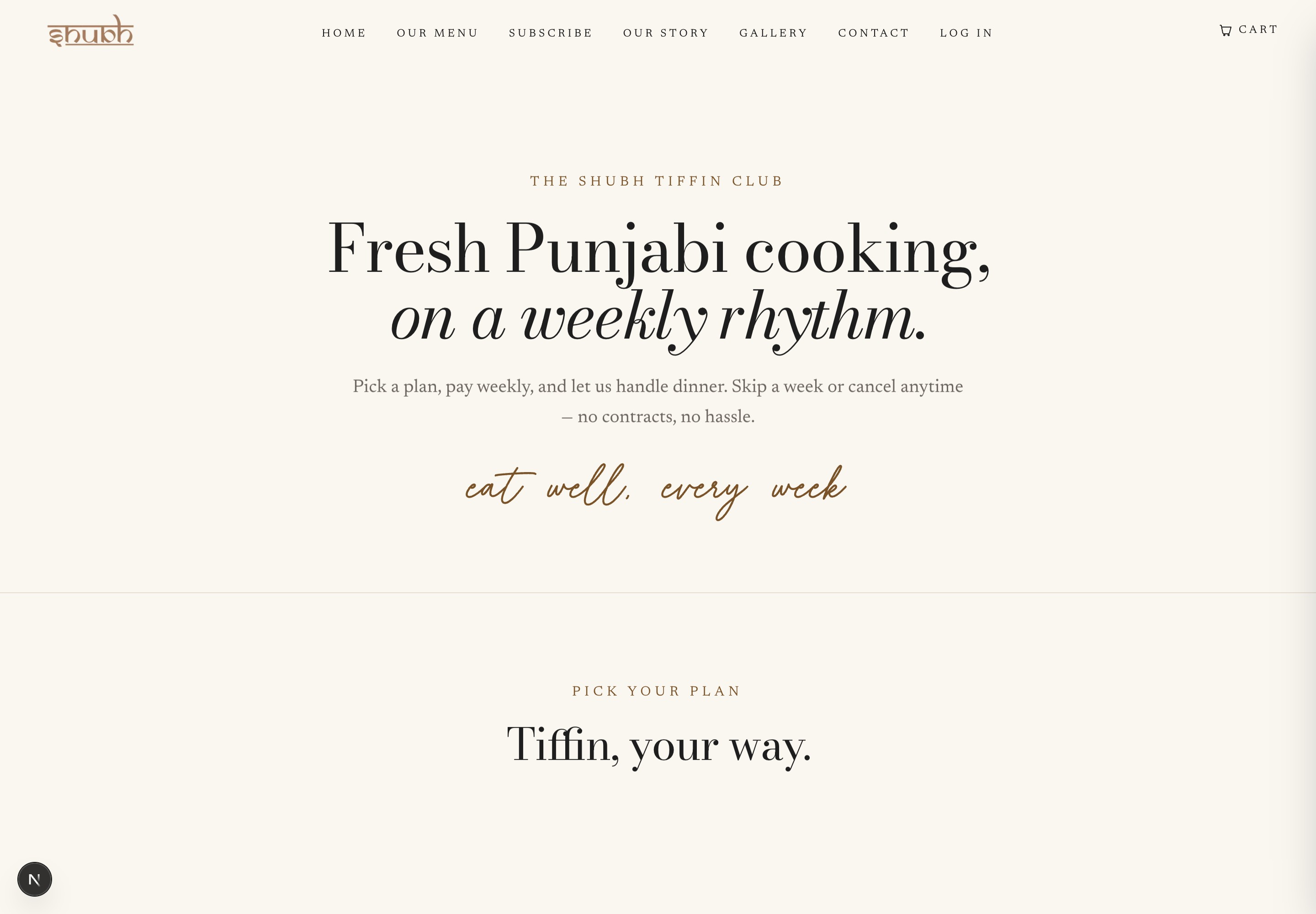
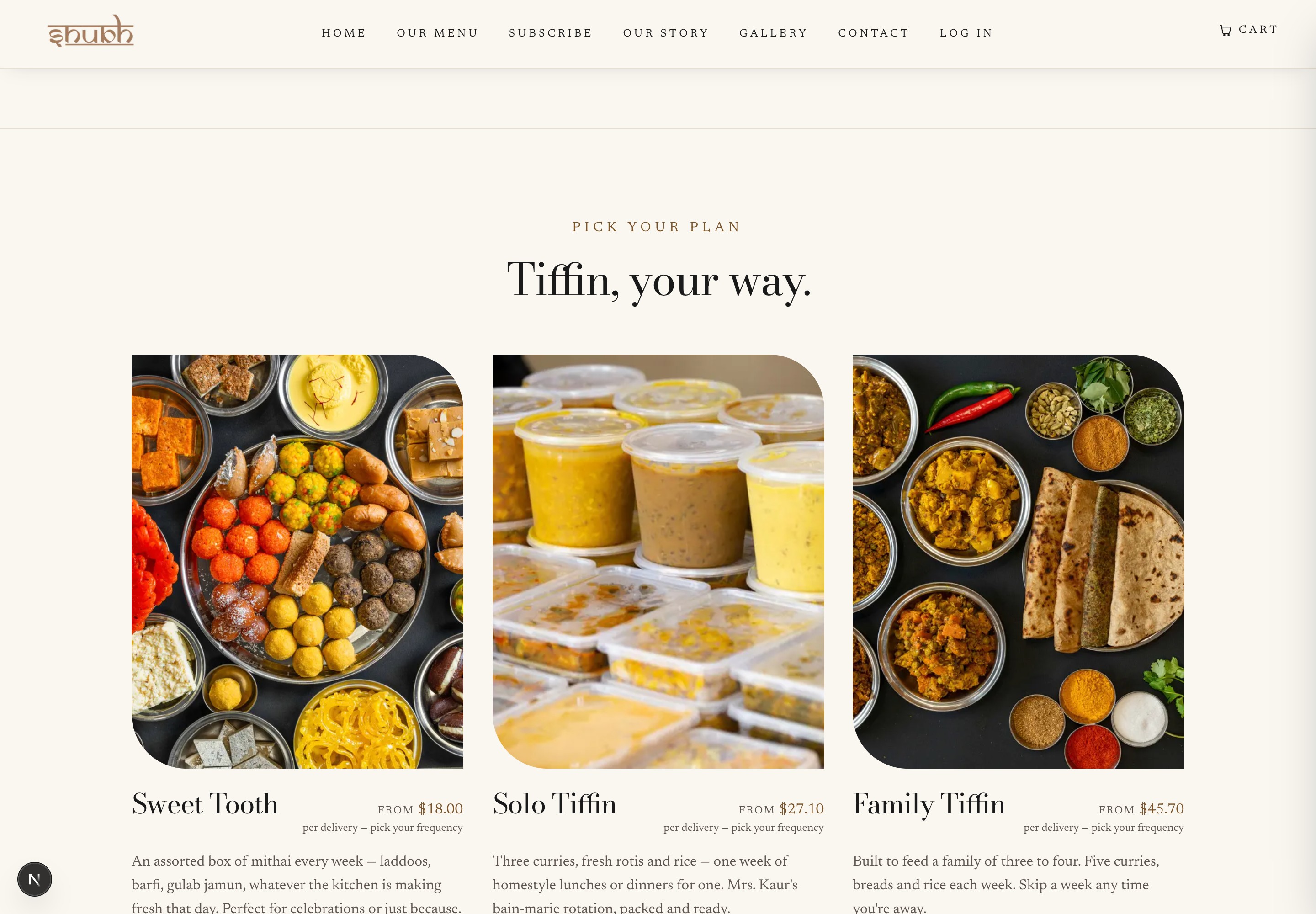
The customer site gives a neighbourhood takeaway the welcome of a destination restaurant. It is warm, unhurried and led by photography. The owner can update every page without calling anyone. Two ways to buy share one platform. Pickup orders come from today’s kitchen. The Tiffin Club, a weekly meal subscription with skip-a-week and cancel-anytime, is built and ready to launch.
Invoices in, intelligence out.
Every answer depended on the invoices, so reading them came first. Nearly 400 invoices from 11 suppliers were read line by line. Every one matches its printed total to the cent. The same product from different suppliers is matched up too. Paneer is paneer, whether it arrives by the kilo, the bag or the pack. That is what makes prices comparable. Suppliers still email their invoices as before. Every half hour, new ones are read and filed automatically, with nobody typing a thing.
The morning’s questions, answered at a glance.
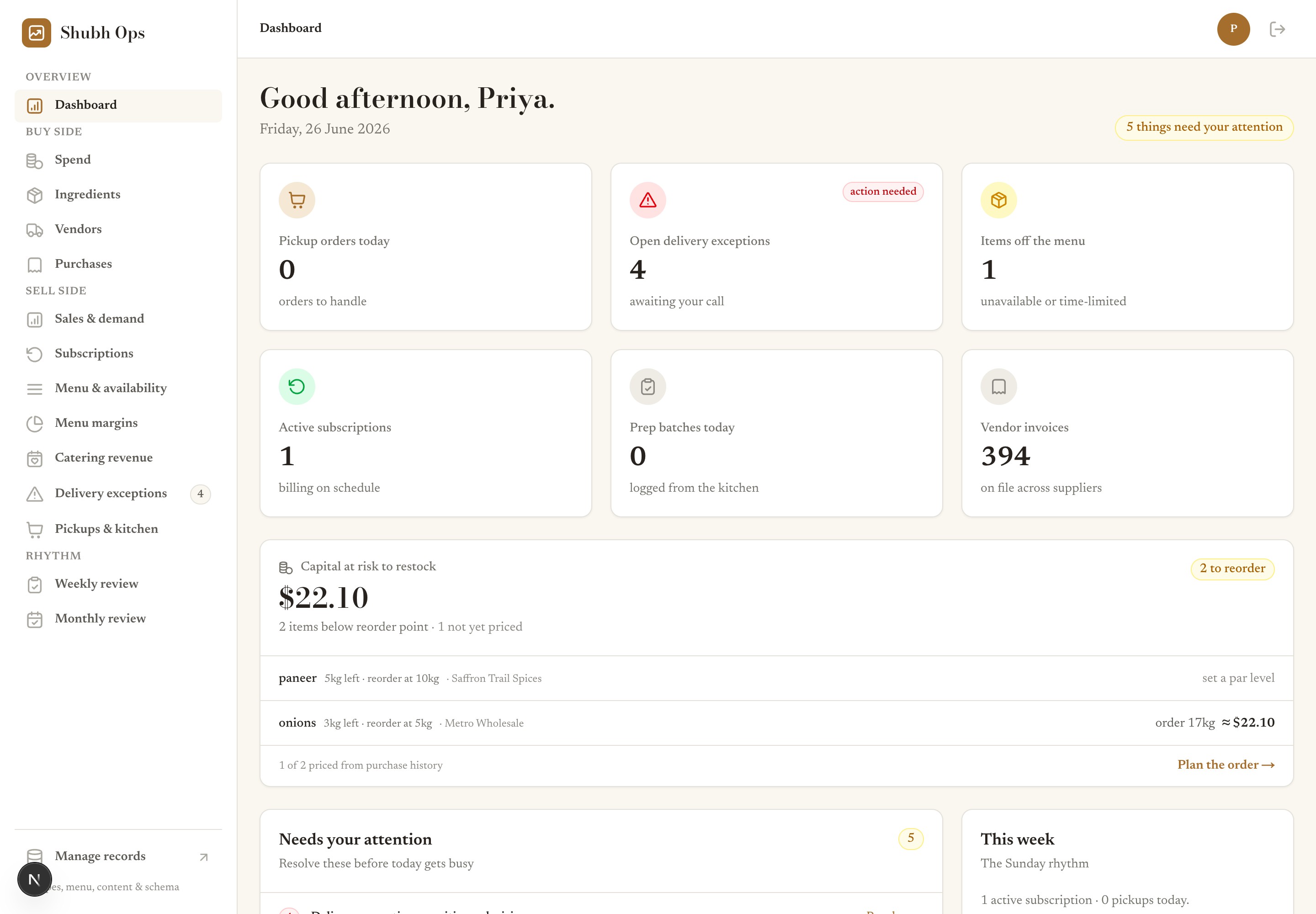
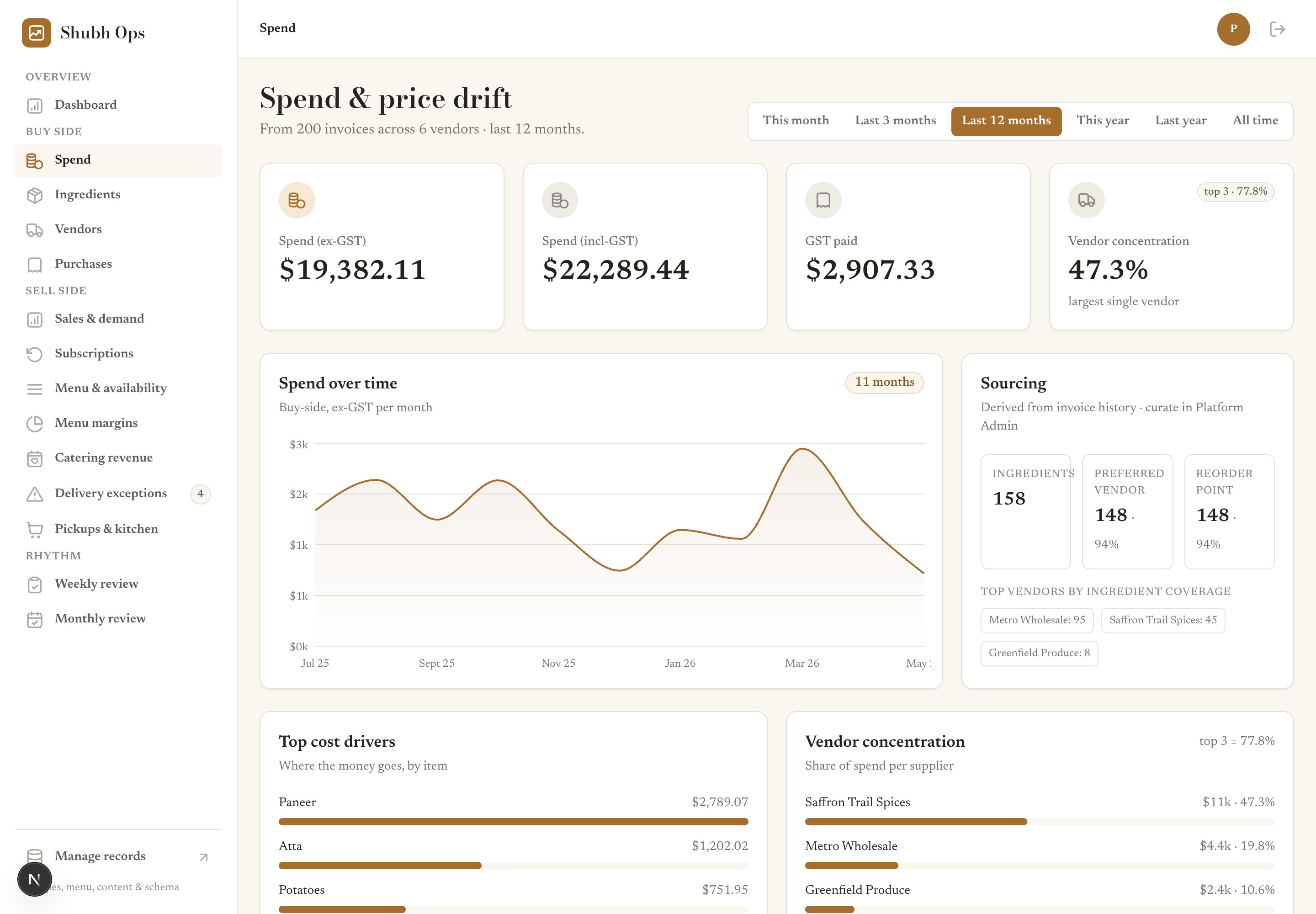
Behind the login, Shubh Ops has the numbers that matter ready each morning. It opens on what needs handling before the lunch rush. Around that sit spend over time, with alerts when prices creep up. There is a scorecard for every supplier and a searchable record of every invoice. Each ingredient has its price history and a forecast. The live menu and a weekly sales review sit alongside. Low stock is grouped by supplier, with orders drafted in one tap. A kitchen screen handles stock counts on the floor. It all wears the restaurant’s own look.
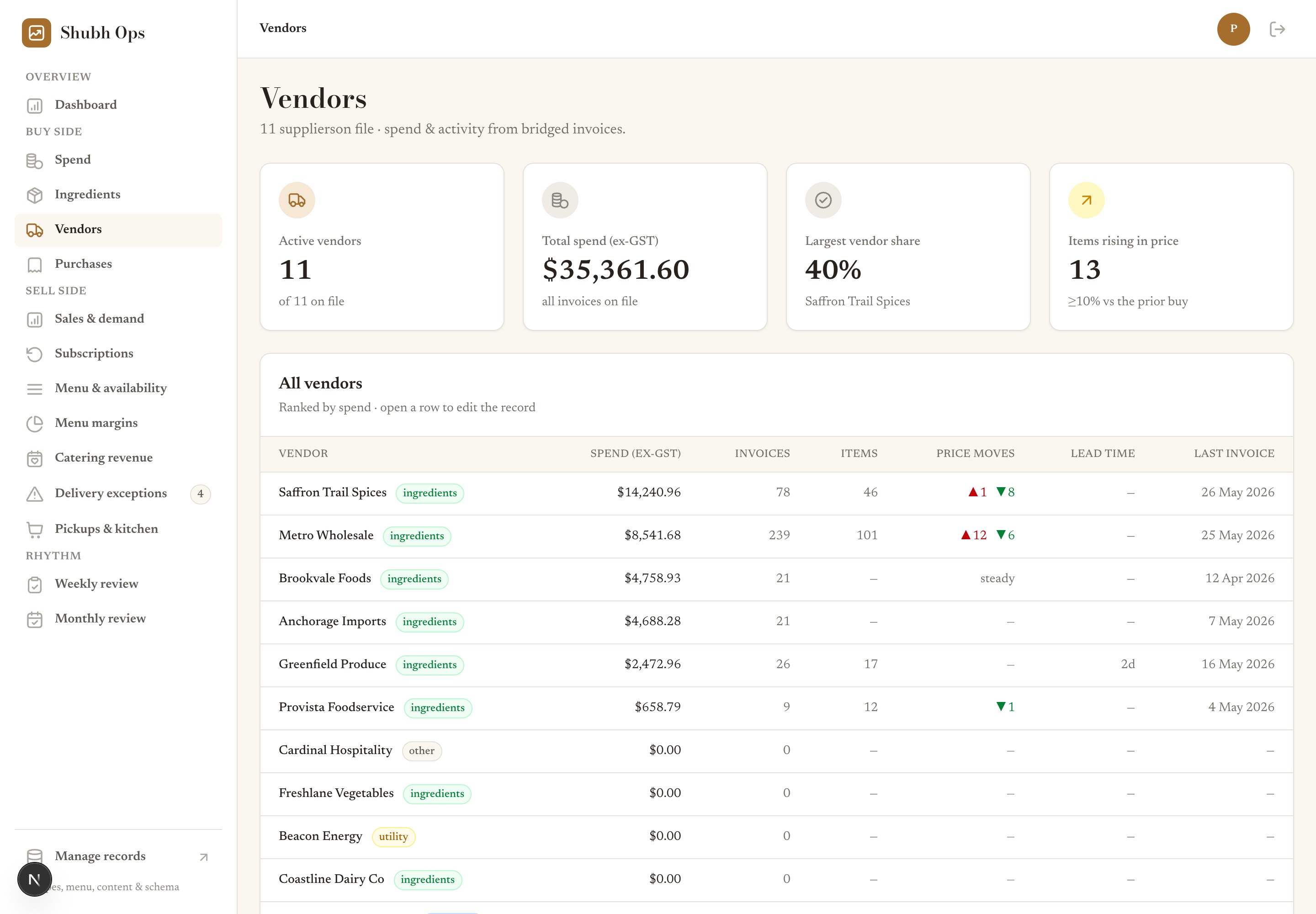
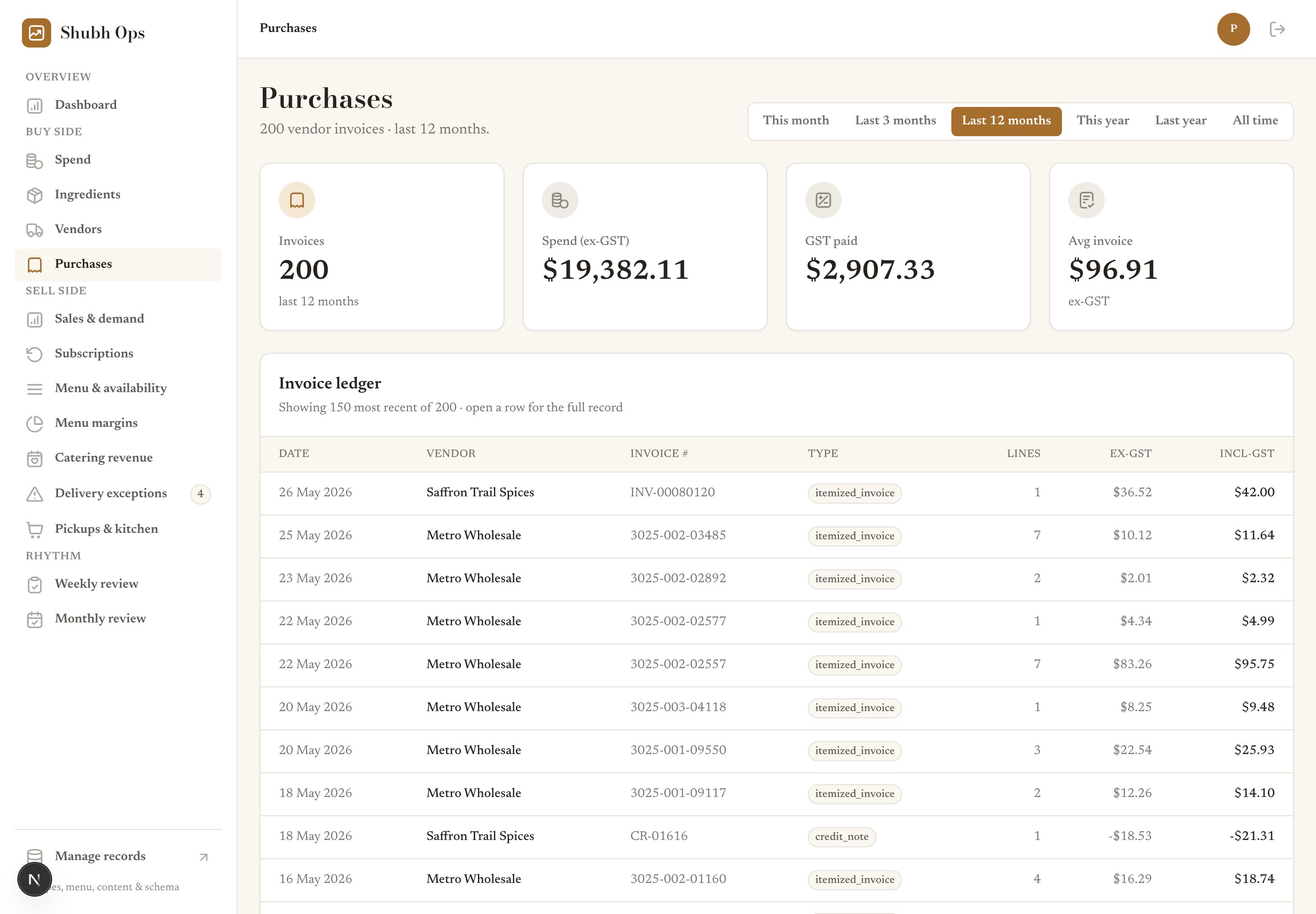
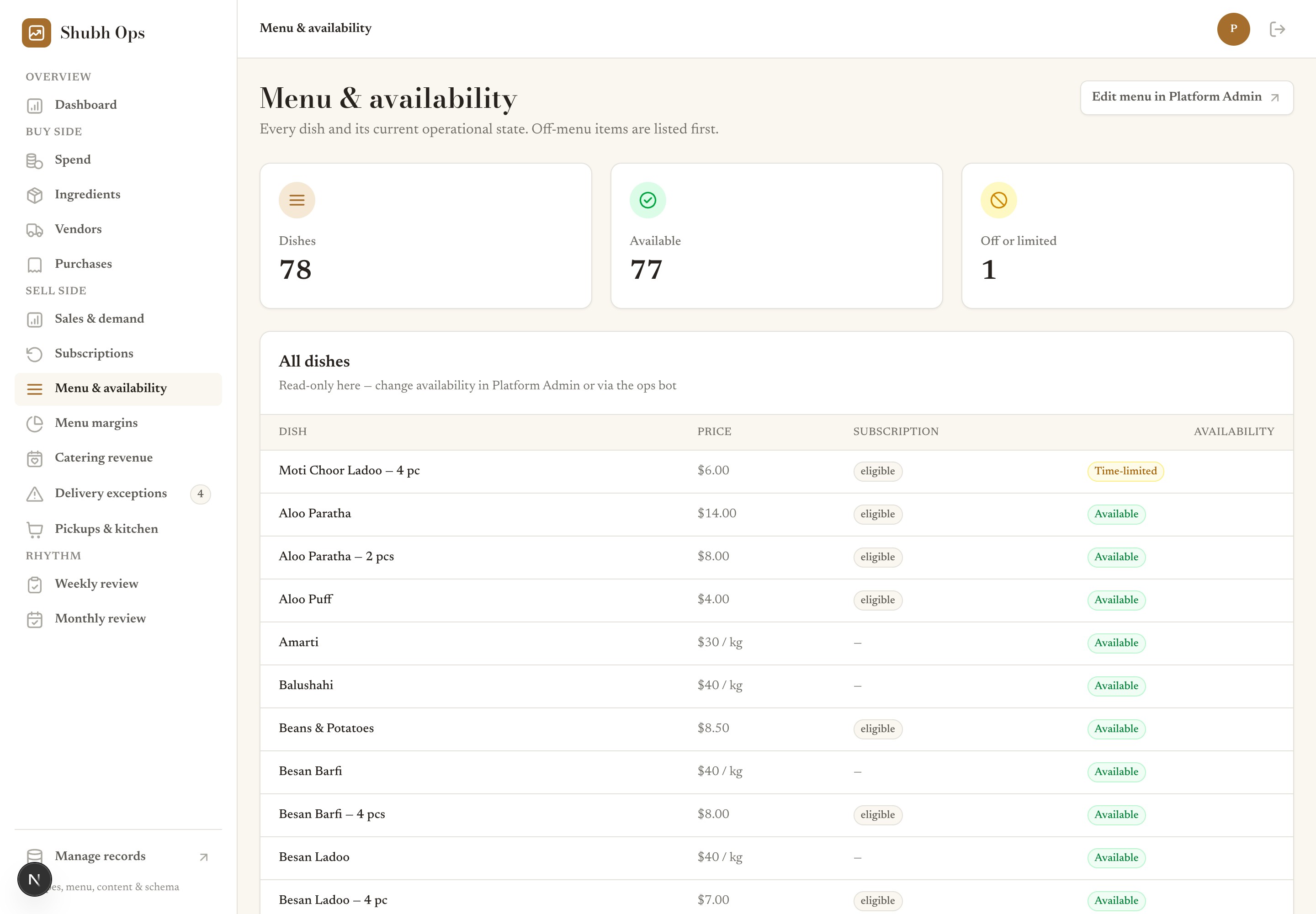
Hermes: the back office in a Slack message.
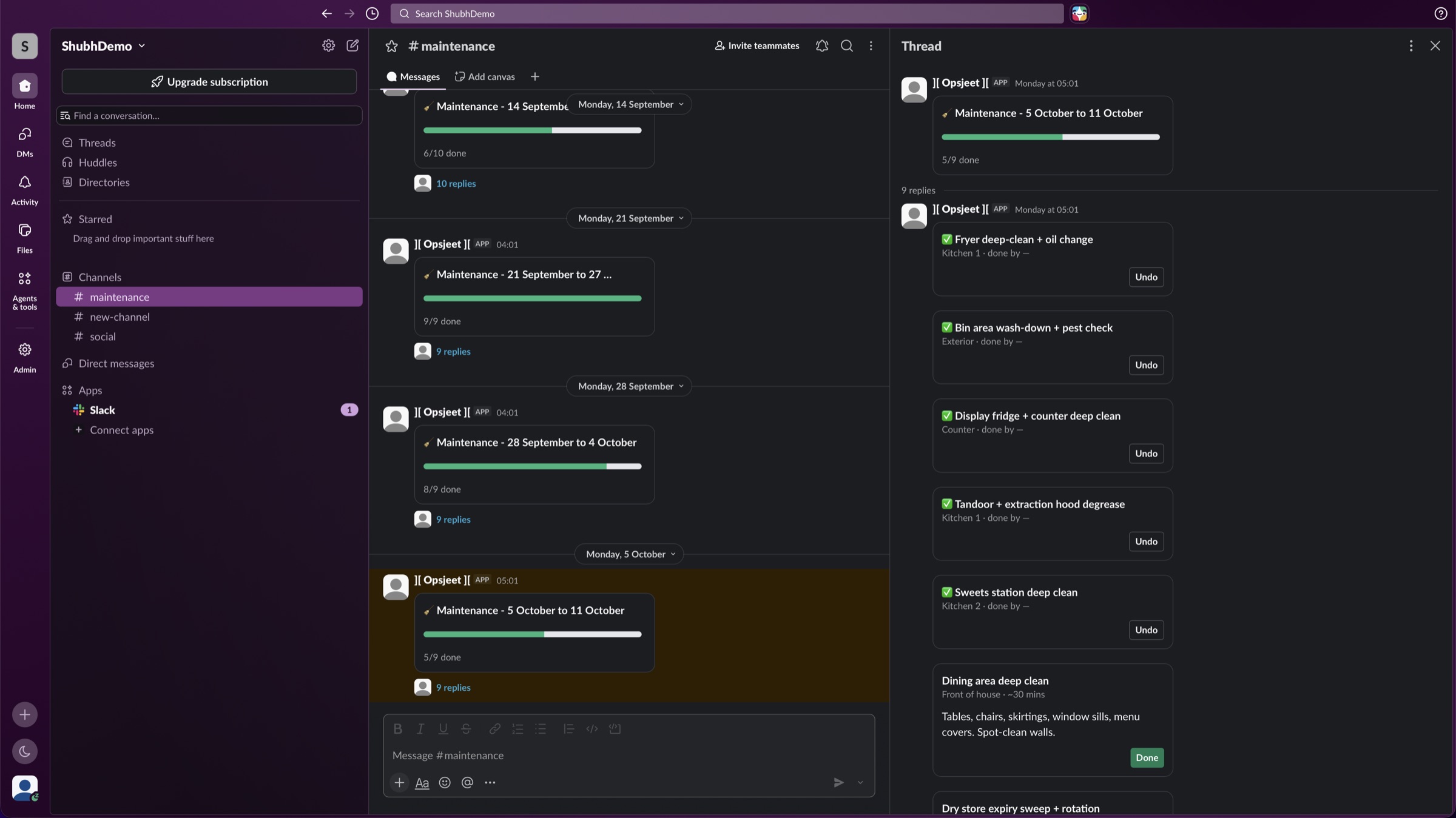
Hermes is an AI assistant in Slack. It answers questions and prepares work for approval. Ask what paneer cost last month, which suppliers are creeping up or how the week sold. The reply comes from the real data. Tell it to mark a dish unavailable or change a price on the website. It shows the change back first, and nothing happens until the owner taps confirm. Customer names never reach the AI. They are added back only on the owner’s screen. Every Monday, Hermes also posts the maintenance board. A whiteboard nobody owned became a list the whole team can claim.
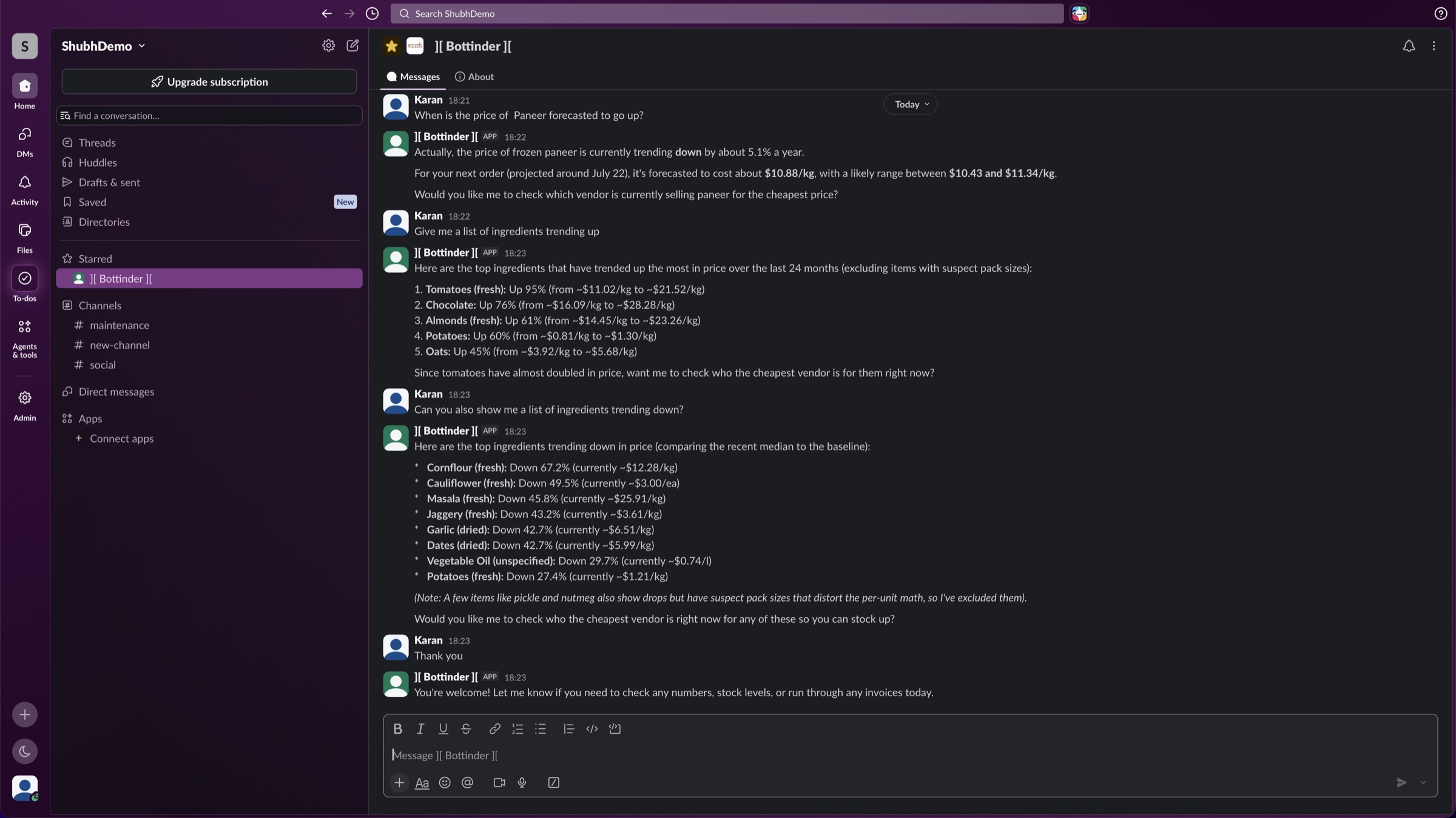
The calls that mattered.
- 01Rules over AI for the invoices. An AI that reads images was tried first. Fixed rules for each supplier’s layout proved faster, cheaper and easy to check. When the output is money, penny-perfect beats plausible.
- 02A person approves anything that matters. Hermes can change prices and orders, so every change waits for the owner’s tap. It earns trust by showing its work, not by moving fast.
- 03Built to switch apps. Hermes launched on Telegram. Then it emerged that NZ phone carriers silently drop Telegram’s sign-up texts, so the owner couldn’t register. Hermes was never tied to one app, so moving to Slack was a settings change.
- 04Checked before launch. A security review found a critical hole in the content system’s default access settings and closed it. It also capped repeated requests and kept Hermes’s private connection off the public internet.
The result.
The money, the stock and the menu now sit in one place. Everything is fed automatically and answerable from a phone. Invoices are read and filed on their own, and the Monday board posts itself. Sales trends now guide how much of each dish the kitchen preps. Connecting the till is next, closing the loop from purchase to sale to forecast.
returned every day, roughly1
supplier invoices from two years, turned into price trends and forecasts2
- 1. The owner’s estimate of the time saved each day since launch, 2026.
- 2. Shubh Ops invoice archive, 2026. Two years of invoices from 11 suppliers.
Have a similar project in mind?
Tell me where it stands and what you need from it, and we’ll work out the right way to approach it.